

We provide specialized winterization services to safeguard your pool during the off-season, and when spring arrives, we handle the thorough opening process.


Sign Up to get updates & news about us . Get Latest Deals from Walker's Inbox to our mail address.
Sign Up to get updates & news about us . Get Latest Deals from Walker's Inbox to our mail address.
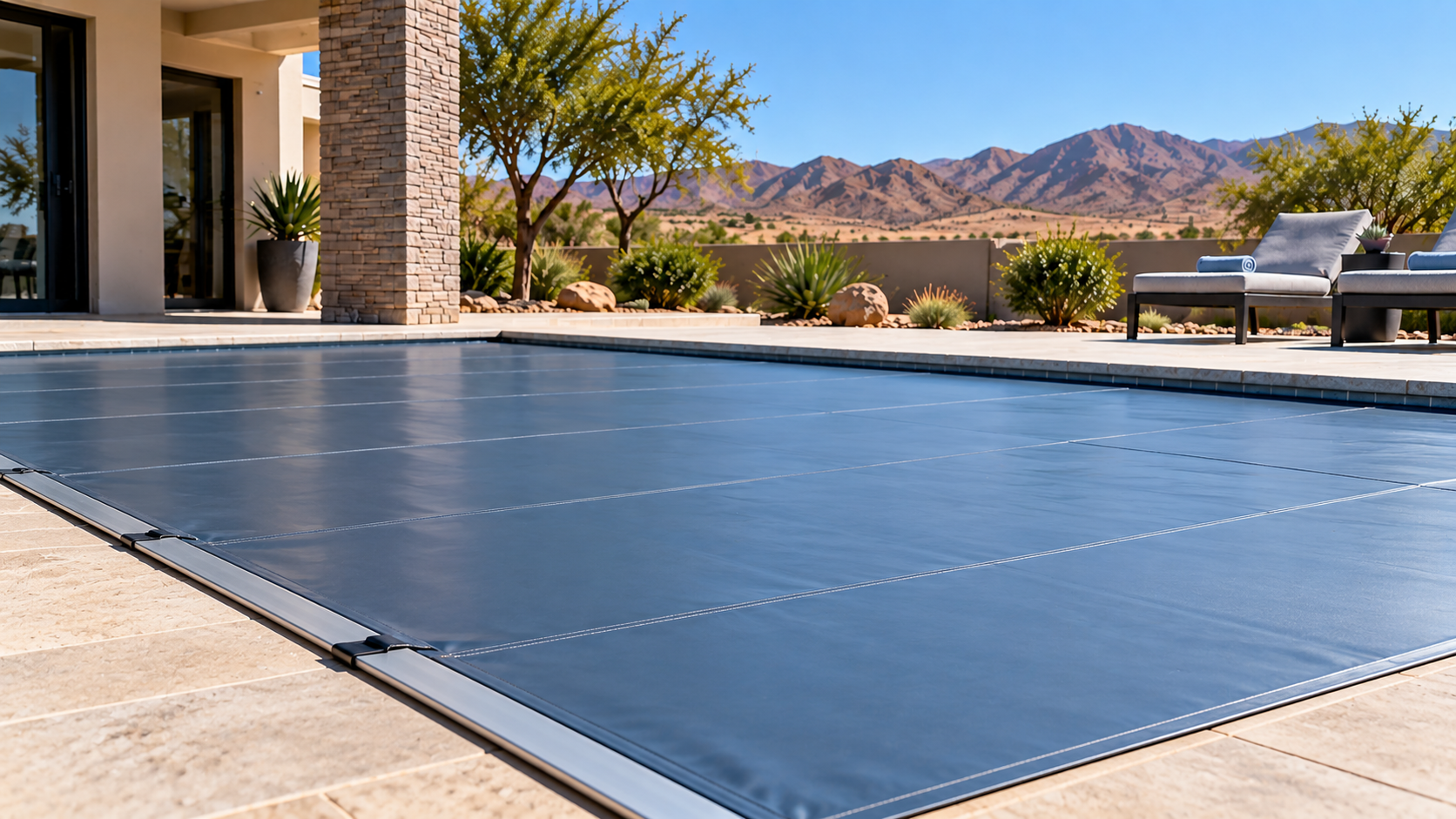
A pool cover is most useful when it is chosen for the problem you actually want it to solve. For one Windhoek property, the priority may be creating a more secure barrier over the water. For another, it may be reducing evaporation, keeping windblown debris out or helping the pool retain more heat between uses.
Those goals do not all require the same type of cover. A fitted cover selected for safety use works differently from a floating bubble or thermal cover, and the right choice also depends on the pool shape, surrounding paving or decking and how practical the cover will be to use from day to day.
The first decision is the purpose of the cover. Safety, evaporation control, heat retention and debris reduction are all valid reasons to cover a swimming pool, but one cover does not automatically perform every role equally well.
Where access to the water is the main concern, the cover needs to be selected and fitted for that purpose. Where the main aim is reducing evaporation or helping the water retain more of its existing warmth, a floating cover may be the more relevant type.
Debris can also be an important practical issue. Wind, nearby trees and exposed gardens can increase the amount of leaves, dust and other material reaching an uncovered pool. A suitable cover can reduce some of that exposure when the pool is not being used, which can make normal cleaning easier.
Some owners will have more than one priority. The useful starting point is to rank those priorities rather than choosing a cover because it is simply the cheapest, thickest or easiest product to find.
A fitted cover selected for safety use is intended to create a more secure barrier across the pool than a loose floating cover. The way it is supported or fixed around the pool matters because the cover needs to work as a complete fitted system rather than only cover the water surface.
A floating bubble, solar or thermal cover serves a different purpose. It sits on the water and is mainly used to reduce evaporation and heat loss while also keeping some debris out. It should not be treated as a safety cover simply because it covers the pool.
This distinction matters especially when children, visitors or pets use the property. A pool owner who needs a safety-oriented solution should choose a cover designed for that role rather than assume a floating cover provides the same level of protection.
Pool safety can also involve more than one measure. Where a property needs a physical barrier around the pool area, pool fencing and enclosures remain a separate option. The cover and the surrounding barrier should be considered according to the way the property is used rather than treated as interchangeable solutions.
Complete the form below and Premium Pools Namibia will get back to you about a pool cover for your Windhoek property.
Windhoek’s water-conscious environment makes evaporation more than an abstract benefit on a product brochure. The City of Windhoek specifically encourages swimming-pool owners to cover pools to reduce evaporation, and Namibia’s dry conditions can make water loss from an uncovered pool a practical concern.
A cover only helps while it is actually in use. That means everyday handling matters. A cover that is awkward to remove, difficult to store or poorly suited to the pool shape may be used less consistently than one that fits the property and normal pool routine.
For floating covers, the benefit comes from reducing the amount of water surface exposed to the air when the pool is not being used. A properly sized cover therefore needs to suit the actual water surface rather than leave large uncovered sections around the edges.
For fitted systems, the pool dimensions, steps, curves and surrounding fixing areas all affect how the cover is arranged. The water-saving value should therefore be considered together with the practicality of covering and uncovering the pool as often as the owner intends.
A cover can reduce the amount of leaves, dust and other windblown material that reaches the water when the pool is not in use. That can help reduce the physical cleaning needed before swimming, although it does not replace normal pool cleaning and maintenance in Windhoek.
Floating covers can also help the pool retain more of the heat already in the water by reducing heat loss from the surface. This can be useful where the owner wants to hold onto warmth gained from the sun or from an active heating system.
Heat retention is not the same as active pool heating. A cover does not generate heat in the way a heat pump or solar pool-heating system does. Where the aim is to raise the water temperature beyond what the pool would naturally reach, pool heating should be considered separately.
The practical side of handling is just as important as these secondary benefits. The owner needs to consider where the cover will go when the pool is open, whether there is enough surrounding space to handle it comfortably and how often it will realistically be removed and replaced.
An existing pool should be measured and considered as the installation that is actually there. Length and width matter, but so do steps, curves, raised edges and unusual pool shapes.
The area around the water matters too. Coping, paving, decking and the available fixing area can affect a fitted cover system. Limited space around the pool may also influence how the cover is opened, removed or stored.
A simple rectangular pool with open paving around it presents a different fitting problem from a pool with curved edges, attached steps or a narrow deck between the water and a wall. The cover should suit those physical conditions rather than forcing one standard layout onto every property.
Where a cover is being considered for a new pool, swimming pool construction in Windhoek allows the pool dimensions and surrounding area to be planned with the future cover in mind. For an existing pool, the focus is on choosing a cover arrangement that works with the completed pool and landscape.
Complete the form below and Premium Pools Namibia will get back to you about a pool cover for your Windhoek property.
A cover can reduce evaporation, help retain heat and keep some debris out of the water. A safety-oriented fitted cover can also serve a different role from a floating cover when access to the water is a concern.
It does not replace every other pool service. The water still needs normal circulation, cleaning and water care. Active pool heating remains separate when the owner wants to add heat rather than simply retain it. Pool fencing and enclosures remain a separate perimeter-barrier service where the property needs one.
Keeping those roles separate makes it easier to choose the right cover. The cover should be selected because it solves the owner’s main pool-management problem, not because it is expected to replace maintenance, heating or another safety measure that serves a different function.
Premium Pools Namibia provides pool-cover services throughout Windhoek, including but not limited to Klein Windhoek, Ludwigsdorf, Eros and Eros Park, Olympia, Suiderhof, Pioneerspark, Hochland Park, Auasblick, Academia and Kleine Kuppe, as well as other Windhoek neighbourhoods.
The appropriate cover can differ from one property to another because the owner’s priorities, pool dimensions, shape, surrounding finishes and everyday handling needs all affect the final choice.
For properties outside Windhoek, Premium Pools Namibia also provides pool covers across Namibia.
Complete the form below and Premium Pools Namibia will get back to you about a pool cover for your Windhoek property.