


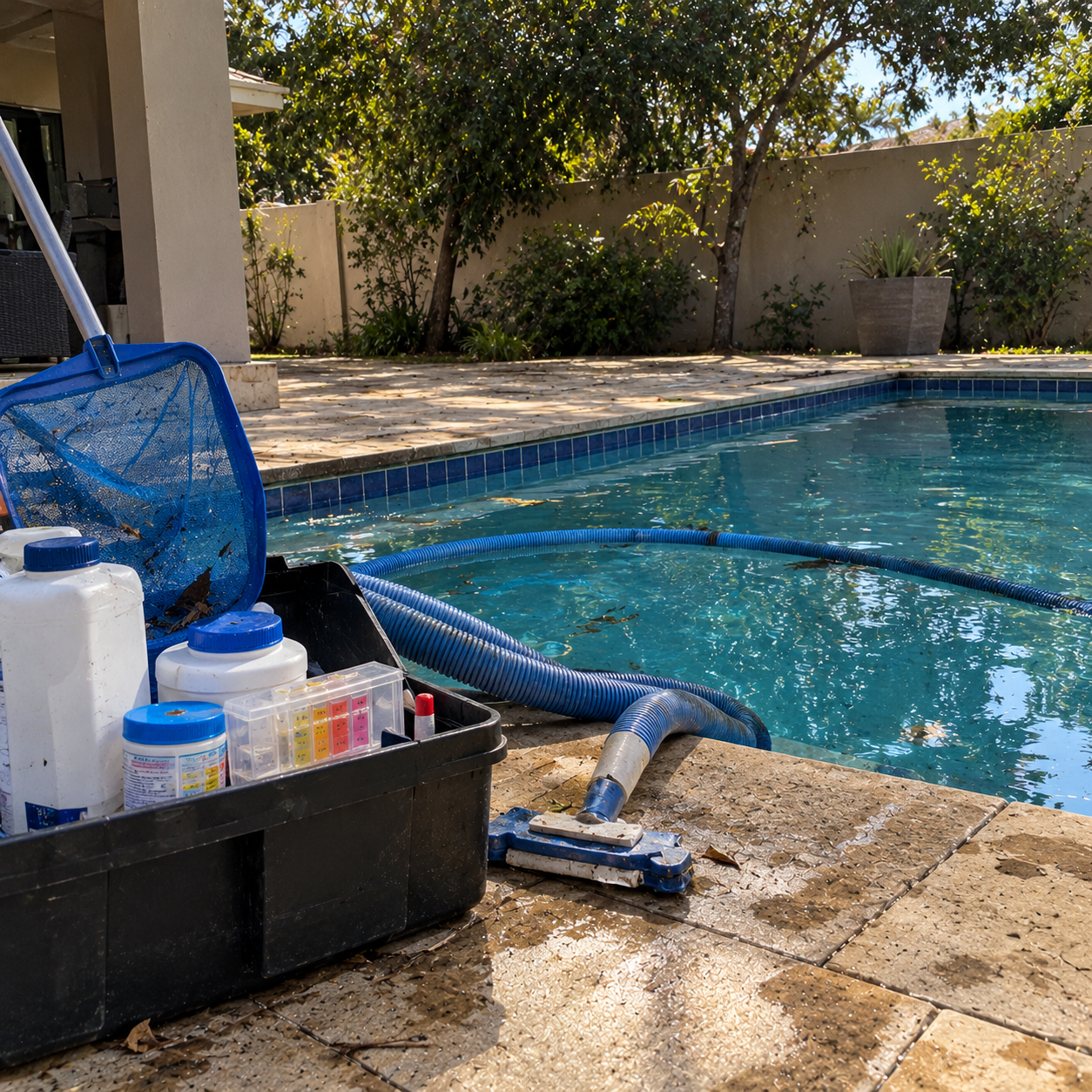
Owning a swimming pool in Namibia comes with the pleasure of having somewhere to cool off during hot weather, spend time with family and enjoy the outdoors. However, keeping the water clean, clear and properly balanced requires regular attention. There are chemicals to buy, filters to maintain, debris to remove and equipment that needs to keep working throughout the year.
For homeowners planning their household expenses, one of the biggest questions is how much swimming pool maintenance actually costs. Is it cheaper to maintain the pool yourself? How much should you budget for regular cleaning? And what happens when the water turns green or the pump starts making unusual noises?
The answer depends on the size of the pool, how frequently it is used, the type of filtration system installed and whether maintenance includes chemicals and equipment checks. A small, well-maintained pool may need relatively little attention, while a larger pool exposed to wind-blown dust, leaves and intense sunshine may require more frequent cleaning and chemical treatment.
As a starting point, a homeowner could budget approximately N$600 to N$1,500 per month for basic routine maintenance, with more comprehensive weekly services potentially costing N$1,500 to N$3,500 or more per month.
Understanding what these figures cover is just as important as knowing the price itself. A low monthly fee may cover cleaning labour but exclude chemicals, while a more comprehensive arrangement may include regular water balancing, chemical dosing and routine equipment checks.
Get a Swimming Pool Maintenance Estimate
Want to know what your pool may cost to maintain? Fill in and submit the form below so Premium Pools Namibia can discuss your requirements.
What Is the Average Cost of Swimming Pool Maintenance in Namibia?
There is no single maintenance price that applies to every swimming pool. The amount you spend depends on whether you maintain the pool yourself, arrange occasional cleaning or use a regular professional service.
The following estimates can help you plan a starting budget. They are expressed in Namibian dollars and should be treated as indicative estimates rather than confirmed prices for a specific town or property.
Basic monthly pool maintenance
Estimated budget: N$600 to N$1,500 per month.
This range is a starting point for a relatively straightforward maintenance arrangement involving routine cleaning and basic water care. The actual scope may be limited, so it is important to establish whether chemicals are included.
A basic service may involve removing leaves and surface debris, checking the water condition, cleaning the pool where needed, checking baskets and carrying out routine filtration tasks.
Smaller pools that are already in good condition may need less time and fewer chemicals than larger or heavily used pools. However, a basic maintenance budget should not be mistaken for an all-inclusive price covering repairs, replacement parts or intensive water treatment.
Regular weekly pool maintenance
Estimated budget: N$1,500 to N$3,500 per month for a more comprehensive service.
A regular weekly arrangement can be useful for pools that receive frequent use or need consistent attention throughout the swimming season.
Depending on the service scope, visits may include vacuuming, brushing the walls and floor, testing and adjusting the water chemistry, cleaning baskets, checking the filter and monitoring the pump’s operation.
The price will depend partly on whether the service provider supplies the chemicals. A plan that includes labour and chemicals will naturally have a different cost structure from one where the owner purchases all the treatment products separately.
Once-off pool cleaning
Indicative budget: N$450 to N$1,200 for a straightforward cleaning visit.
A once-off visit may suit a pool that needs a thorough clean after a period of limited use, a build-up of leaves or a temporary lapse in routine maintenance.
The lower end of this estimate is more appropriate as a planning reference for relatively straightforward work. A pool with heavy debris, stubborn staining, cloudy water or established algae may need considerably more labour and treatment.
A standard cleaning visit is also different from restoring a severely neglected pool. If the water is green, the filter is struggling or the circulation system has a fault, additional work may be required before the pool returns to a suitable condition.
Intensive green-pool recovery
Indicative budgeting range: N$1,500 to N$5,000 or more.
A green pool often needs more than a routine cleaning visit. The recovery process may involve testing the water, correcting chemical imbalances, treating algae, brushing surfaces, cleaning the filtration system and allowing additional circulation time.
The severity of the problem makes a substantial difference to the final cost. A pool that has only recently started turning green may be easier to restore than one that has been neglected for weeks or has a filtration problem.
The upper end of the range is not a fixed ceiling. If the pool requires equipment repairs, specialist cleaning or extensive additional treatment, the cost may be higher.
A simple annual budget
Monthly maintenance costs can appear manageable until they are added up over a full year.
For example, a homeowner budgeting N$1,000 per month for routine maintenance would spend approximately N$12,000 annually. At N$2,000 per month, the annual amount would be N$24,000.
These calculations cover only the assumed monthly maintenance budget. They do not automatically include major repairs, pump replacement, resurfacing, new equipment or exceptional chemical treatments.
It is sensible to keep routine maintenance and unexpected repair expenses separate in your household budget. That way, a problem with the pump or filter does not completely disrupt the money allocated to ordinary pool care.
What Is Included in Swimming Pool Maintenance?
Before deciding whether a maintenance price is reasonable, it helps to understand what the service involves. Pool maintenance is not simply a matter of removing leaves and making the water look blue. The water chemistry, filtration and circulation system all affect the pool’s condition.
Surface cleaning and debris removal
Leaves, insects, dust and other debris can accumulate on the water’s surface. If left for too long, some of this material sinks to the bottom or collects along the waterline.
Routine cleaning may involve skimming the surface, removing debris from the floor, brushing walls and steps, and vacuuming where necessary. The exact amount of work depends on how much material enters the pool and how quickly it accumulates.
Properties surrounded by trees or exposed to wind-blown dust may need more attention than sheltered gardens. After a windy day or a storm, the pool may require additional cleaning even if it was serviced recently.
Regular removal of debris also reduces the amount of organic material breaking down in the water, which can affect chlorine demand and contribute to staining.
Water testing and chemical balancing
Pool water needs appropriate chemical treatment to maintain suitable swimming conditions and limit algae growth.
Depending on the pool and its sanitising system, maintenance may include checking chlorine or another sanitiser, pH and total alkalinity. Other parameters, such as calcium hardness and stabiliser, may also need attention.
Chemical treatment should be based on the pool’s actual condition rather than adding products without testing. Incorrect dosing can waste chemicals, create water-quality problems and potentially damage surfaces or equipment.
The cost of water balancing varies according to the volume of water, the chemicals required and how far the readings have moved from their target ranges.
A pool that has been maintained consistently may need relatively small adjustments. One that has been neglected may require more substantial treatment before routine maintenance can resume.
Filter cleaning and maintenance
The filter removes particles from the water as it circulates through the system. Depending on the filter type, maintenance may involve backwashing, rinsing, cleaning cartridges or checking the filter media.
A filter should be maintained according to its design and operating requirements. Backwashing too frequently can waste water, while failing to clean the filter when necessary can restrict flow and reduce filtration performance.
The filter’s condition also influences how long it takes to clear the pool after heavy use or a period of poor water quality. A damaged component or worn filter media may require additional work beyond ordinary cleaning.
Routine maintenance can identify changes in filter pressure, water flow or performance before they develop into more disruptive problems.
Pump and circulation checks
The pump moves water through the filtration and treatment system. If it stops working properly, the pool may struggle to remain clear even when chemicals are added.
Routine checks may include looking for visible leaks, unusual noise, poor water flow, blocked baskets or other obvious signs of a problem. These checks do not replace specialist diagnosis or repairs when a fault is found.
The cost of ordinary maintenance should therefore be distinguished from the cost of repairing or replacing a pump. Parts, labour, equipment specifications and the condition of the existing installation all affect the final amount.
A service plan should make clear whether equipment checks are included and whether any repairs are charged separately.
Why Does Swimming Pool Maintenance Cost More for Some Pools?
Two swimming pools can be similar in size and still have different maintenance costs. The amount of work required depends on the pool’s surroundings, usage, equipment and current condition.
Pool size and water volume
A larger pool generally requires more time to clean and more chemicals when treatment is needed. Its water volume also affects how much product is required to correct certain chemical imbalances.
However, surface area matters too. A wide pool may collect more leaves and dust than a compact pool with a similar water volume, particularly if it is exposed to wind.
The shape of the pool can influence the workload as well. Numerous steps, corners, ledges and built-in features may take longer to brush and vacuum than a simple rectangular design.
This is why the dimensions and layout of the pool are useful when estimating maintenance costs. The number of litres alone does not tell the whole story.
Exposure to sunlight and wind
Namibia’s sunshine and dry conditions can contribute to water evaporation. Strong winds can increase evaporation and carry dust, sand and other debris into the pool.
A pool in an exposed garden may therefore require more frequent water-level checks and cleaning than one protected by suitable landscaping or walls.
Sunlight also affects chlorine in outdoor pools. Stabiliser levels and sanitiser management need to be appropriate for the pool’s system and conditions so that the water remains properly treated.
A cover can help reduce evaporation when the pool is not in use, although it does not eliminate water loss or replace routine maintenance.
How often the pool is used
A pool used daily by a large household may have different maintenance requirements from one used only occasionally.
Swimmers introduce contaminants such as sweat, body oils and other organic material. These increase the demands placed on the sanitising system and can affect how frequently the pool needs cleaning.
Guesthouses, lodges and other properties with regular visitors may have especially demanding maintenance schedules because of higher bather loads.
The more frequently a pool is used, the more important it becomes to monitor water quality and respond to changes before they lead to cloudy water or algae growth.
Trees, gardens and surrounding surfaces
Trees can make a garden attractive, but falling leaves, flowers, seeds and small branches can increase the amount of debris entering the pool.
Nearby lawns and garden beds may also contribute grass clippings, soil and dust. When these materials enter the water, they add to the cleaning workload and can affect chemical demand.
Pool owners cannot always change the landscaping, but they can account for these conditions when planning maintenance. A pool under several overhanging trees may need more frequent skimming and basket cleaning than a pool in an open area.
The condition of the pool when maintenance begins
A pool that is already clean and balanced is usually easier to maintain than one that has been neglected.
If the water is green, the floor is covered in debris or the filter is not working properly, the first service may involve considerably more work than an ordinary visit.
There may also be underlying problems that cannot be corrected through cleaning alone. A leaking pipe, failing pump or damaged filter can continue to affect the pool until the cause is addressed.
This is why a once-off recovery service and a routine maintenance plan should be treated as separate expenses.
Plan Your Pool Maintenance Budget
Tell Premium Pools Namibia about your pool and maintenance needs. Fill in and submit the form below to discuss a suitable service.
Should You Maintain Your Pool Yourself or Pay for a Service?
Whether it makes sense to maintain a pool yourself depends on the time you have available, your confidence with water testing and the condition of your equipment.
Doing some of the routine work yourself can reduce labour costs, but it does not make pool maintenance free. You still need suitable cleaning equipment, chemicals, water testing supplies and time to carry out the work consistently.
The cost of doing it yourself
A homeowner who maintains their own pool will generally need to budget for chemicals, testing products and the replacement of worn cleaning tools.
As an indicative planning allowance, N$400 to N$1,000 per month may be a starting point for routine chemicals and basic consumables for a typical residential pool. This is a broad estimate, not a verified Namibian retail price range. The actual cost can fall below or exceed it depending on the pool’s size, sanitising system, water condition and seasonal demand.
This allowance does not include the value of the homeowner’s time, electricity for the pump, water consumption, major equipment servicing or repairs.
DIY maintenance also requires some understanding of water chemistry. Adding more chlorine whenever the water looks cloudy, for example, may not resolve a problem caused by poor filtration, incorrect pH or another underlying issue.
Owners who take responsibility for their own pools should follow the instructions for their testing products and chemicals, store chemicals safely and avoid mixing incompatible products.
The cost of professional maintenance
Professional maintenance involves paying for labour, knowledge, equipment and the time needed to keep the pool in good condition.
Depending on the agreed service, the provider may carry out cleaning, test and balance the water, inspect accessible equipment and identify visible signs of developing problems.
A regular service can be particularly useful for busy households, properties with demanding pool conditions or owners who are not comfortable managing chemical treatment themselves.
The important consideration is the scope of work. A monthly price should be assessed against the number of visits, the tasks included and whether chemicals are supplied.
Professional maintenance does not mean every possible repair is included. Pump replacement, plumbing work, leak detection and extensive restoration generally need to be considered separately unless specifically covered by an agreement.
A practical comparison
Consider two homeowners with similar pools.
The first homeowner spends time every week skimming the water, brushing the surfaces, testing the chemistry and cleaning the filter when required. They purchase chemicals and handle minor routine tasks themselves.
The second homeowner arranges a regular service that covers agreed cleaning and water-care tasks. They pay a monthly fee but spend less time carrying out the work.
Neither approach is automatically cheaper in every situation. The DIY owner saves on service labour but carries the cost of supplies and time. The owner using a maintenance service pays for convenience and the agreed work, while still needing to budget for anything excluded from the service.
The most suitable arrangement is one that keeps the pool properly maintained within the owner’s budget and available time.
How Often Should a Swimming Pool Be Maintained?
The right maintenance frequency depends on the pool’s condition, its usage and how quickly debris and chemical changes affect the water.
Weekly maintenance
Weekly attention is often a practical starting point for an outdoor residential pool that is used regularly, particularly during warmer periods.
A weekly routine can include skimming, brushing, checking baskets, inspecting the filter and testing the water. Vacuuming and other tasks can be carried out according to the amount of debris and the pool’s condition.
Weekly maintenance also creates opportunities to notice changes in the water level, equipment noise, water flow or surface condition before they become more serious.
The cost depends on whether the homeowner does the work or pays for a service, as well as whether chemicals and equipment checks are included.
Fortnightly maintenance
A fortnightly professional visit may be suitable for some pools that are lightly used, protected from debris and kept in good condition between visits. However, less frequent professional servicing does not mean the pool can be ignored for two weeks.
The owner still needs to monitor the water, remove debris and ensure the circulation system operates correctly. Water testing may need to take place more frequently than the professional visit, depending on the conditions and sanitising system.
If the pool is exposed to intense sunshine, heavy use or frequent debris, fortnightly servicing may not provide enough support without additional attention between visits.
Monthly maintenance
A monthly professional visit may be useful for a pool that is already being managed consistently by the owner and needs periodic equipment checks or additional assistance.
It is less suitable as the only form of attention for a heavily used outdoor pool if the water is not being tested and cleaned between visits.
The monthly visit may also become more expensive if the pool has deteriorated and needs intensive cleaning or chemical correction because routine care has been missed.
The goal should not be to minimise the number of visits at all costs. It should be to maintain the pool at a frequency that prevents avoidable problems while making sensible use of the maintenance budget.
What Additional Costs Should Pool Owners Budget For?
Routine maintenance is only part of the overall cost of owning a swimming pool. Equipment wears out, chemical requirements change and occasional problems may need more than a standard service visit.
Swimming pool chemicals
The amount spent on chemicals depends on the pool’s volume, water condition, sanitising system and how consistently the water is maintained.
Chlorine or another suitable sanitiser is needed to manage microorganisms. Other products may be required to correct pH, manage alkalinity or address specific water-quality issues.
If chemicals are included in a maintenance plan, the agreement should explain what is covered and how unusual treatment requirements are handled. If they are billed separately, the owner should allow for fluctuations in usage rather than assuming the same amount will be needed every month.
Heavy rain, increased swimming, high temperatures and algae growth can all affect the amount of treatment required.
Pump and filter servicing
A pool pump and filter are essential parts of the circulation system. They need periodic attention, and damaged components may require repair or replacement.
For budgeting in Namibia, it is sensible to allow a separate reserve for equipment work rather than assuming it will be covered by the monthly cleaning fee.
A pump that is noisy, leaking or struggling to circulate water should be assessed before the problem causes further disruption. Similarly, a filter that cannot maintain adequate flow may affect both water clarity and chemical treatment.
Green-pool treatment
Algae can develop when sanitiser levels are inadequate, circulation is poor or water conditions are not properly managed.
Restoring a green pool may involve substantial chemical treatment, brushing, vacuuming, filtration and follow-up checks. If the filter or pump is faulty, that issue may also need to be resolved.
The cost depends on how long the problem has been developing and whether the pool can be restored through treatment and cleaning alone.
A pool that repeatedly turns green may need a closer look at its maintenance routine, water chemistry and equipment rather than repeated emergency treatments.
Water loss and leaks
Some water loss is expected in an outdoor pool because of evaporation and splashing. However, an unexplained or persistent drop in the water level may indicate a leak.
The cost of investigating the problem depends on where the leak is located, the testing methods needed and whether the fault is accessible.
A leak that is ignored may increase water consumption and potentially affect the surrounding ground or pool structure. It can also make routine chemical management more difficult because the water level and concentration of treatment products may change.
If the water level keeps falling more than expected, it is worth investigating the cause instead of repeatedly topping up the pool without understanding why the water is disappearing.
Electricity and water
The pump needs electricity to circulate water through the filtration system. The cost depends on the pump’s power consumption, operating hours and the property’s electricity tariff.
Water costs depend on how much is added to replace evaporation, splashing, backwashing and other losses. A pool cover can help reduce evaporation, but it will not prevent all water loss.
These expenses are separate from the maintenance service itself, so they should be included when calculating the overall monthly cost of owning a pool.
How Can You Keep Swimming Pool Maintenance Costs Under Control?
Keeping maintenance costs manageable is not simply about spending less on cleaning or chemicals. It is about preventing avoidable problems and making sure the money spent on routine care is doing useful work.
Keep up with routine cleaning
Removing leaves and debris before they accumulate helps prevent unnecessary cleaning work and reduces the amount of organic material entering the water.
Brush the pool surfaces where algae can establish, particularly in corners, steps and areas where water circulation is weaker. Keep skimmer and pump baskets clear so that debris does not obstruct water flow.
These simple tasks can reduce the likelihood of a small maintenance issue becoming a more demanding cleaning job.
Test the water instead of guessing
Water that looks clear is not necessarily balanced, and cloudy water does not always mean more chlorine is the only answer.
Testing the water helps identify which parameters need adjustment. It also reduces the risk of wasting chemicals through unnecessary dosing.
Follow the recommendations for the pool’s sanitising system and use products according to their instructions. If the water repeatedly becomes unbalanced, investigate the underlying cause instead of treating each episode as an isolated problem.
Maintain the equipment
Keep an eye on pump noise, water flow, filter pressure and visible leaks. Changes in how the system operates can indicate that something needs attention.
The filter should be cleaned when required according to its design and operating instructions. The pump should have adequate water supply and should not be allowed to run dry.
Routine observation cannot prevent every equipment failure, but it can help identify warning signs before the problem becomes more disruptive.
Use a pool cover where appropriate
A suitable pool cover can help reduce evaporation and limit the amount of debris entering the water while the pool is not in use.
This may be particularly useful in exposed gardens where strong sunshine and wind increase water loss. However, the type of cover matters. A bubble cover is primarily intended for heat retention and evaporation control, not as a safety barrier.
A cover can support a sensible maintenance routine, but it does not replace water testing, filtration or cleaning.
Adjust maintenance to the season
The pool’s requirements can change throughout the year. During warmer periods, increased use and stronger sunlight may increase the need for water testing and cleaning.
During cooler periods, the pool may need less frequent cleaning, but it should not simply be abandoned. Water chemistry, circulation and equipment condition still require appropriate attention.
Adapting the routine to the actual conditions can help avoid both unnecessary work and the cost of allowing the pool to deteriorate.
When Does Routine Maintenance Become a Repair Job?
One of the most important distinctions in a pool-maintenance budget is the difference between routine servicing and repairs.
Routine maintenance generally involves keeping an otherwise functional pool clean, balanced and operating as expected. Repairs address faults or damage that prevent the pool or its equipment from functioning properly.
For example, cleaning a pump basket is a routine task. Replacing a failed pump motor is a repair. Testing and adjusting the water chemistry is ordinary pool care, while diagnosing a persistent leak may require specialist investigation.
The distinction matters because a standard monthly maintenance price should not be assumed to cover every possible fault.
Signs that additional work may be needed include:
-
The pump repeatedly loses prime or makes unusual noises.
-
Water circulation becomes noticeably weaker.
-
The pool continues losing water without an obvious explanation.
-
Algae returns repeatedly despite appropriate cleaning and treatment.
-
The filter struggles to maintain water clarity.
-
Cracks, loose fittings or other visible damage appear around the pool.
-
The water becomes cloudy or discoloured for reasons that ordinary maintenance does not resolve.
Addressing these signs promptly may help limit further damage, although the final cost depends on the underlying cause and the work required.
How to Budget for Pool Maintenance Throughout the Year
A realistic pool budget should include regular maintenance, consumables and a separate allowance for occasional equipment or repair expenses.
For example, a homeowner who sets aside N$1,000 per month for routine pool care has an annual maintenance budget of N$12,000. If the pool needs a pump repair during the year, that expense may need to come from a separate reserve.
Another homeowner who uses a more comprehensive weekly service at N$2,000 per month would budget N$24,000 annually for that assumed service level. The total cost of ownership could still be higher if electricity, water, major chemicals or repairs are excluded.
These examples are budgeting calculations, not quotations or predictions of what every pool owner will spend.
It is also worth considering whether the monthly service arrangement changes during the year. A pool may require more attention during the swimming season, while cooler periods may allow adjustments to the maintenance schedule if the water and equipment remain properly managed.
The best budget is one that reflects the pool’s actual needs rather than relying on a single figure without considering what it includes.
Get a Swimming Pool Maintenance Estimate from Premium Pools Namibia
Swimming pool maintenance costs in Namibia depend on the work required, the pool’s size and condition, the frequency of servicing and whether chemicals and equipment checks are included.
For a starting budget, basic routine maintenance may be estimated at around N$600 to N$1,500 per month, while a more comprehensive weekly arrangement may fall around N$1,500 to N$3,500 or more. Once-off cleaning and intensive green-pool recovery can involve separate charges, particularly when the pool needs substantial treatment or equipment repairs.
These figures provide an initial budgeting reference only. They are not confirmed Premium Pools Namibia prices, and the final amount for a particular property will depend on its requirements.
Premium Pools Namibia can help you discuss the work your swimming pool needs and determine an appropriate maintenance arrangement. Whether you need regular cleaning, water-care assistance or help addressing a pool that is no longer staying clear, the first step is understanding the condition of the pool and the scope of the service required.
Request Your Pool Maintenance Estimate
Ready to plan your pool maintenance? Fill in and submit the form below so Premium Pools Namibia can get in touch about your needs.

Comments are closed