


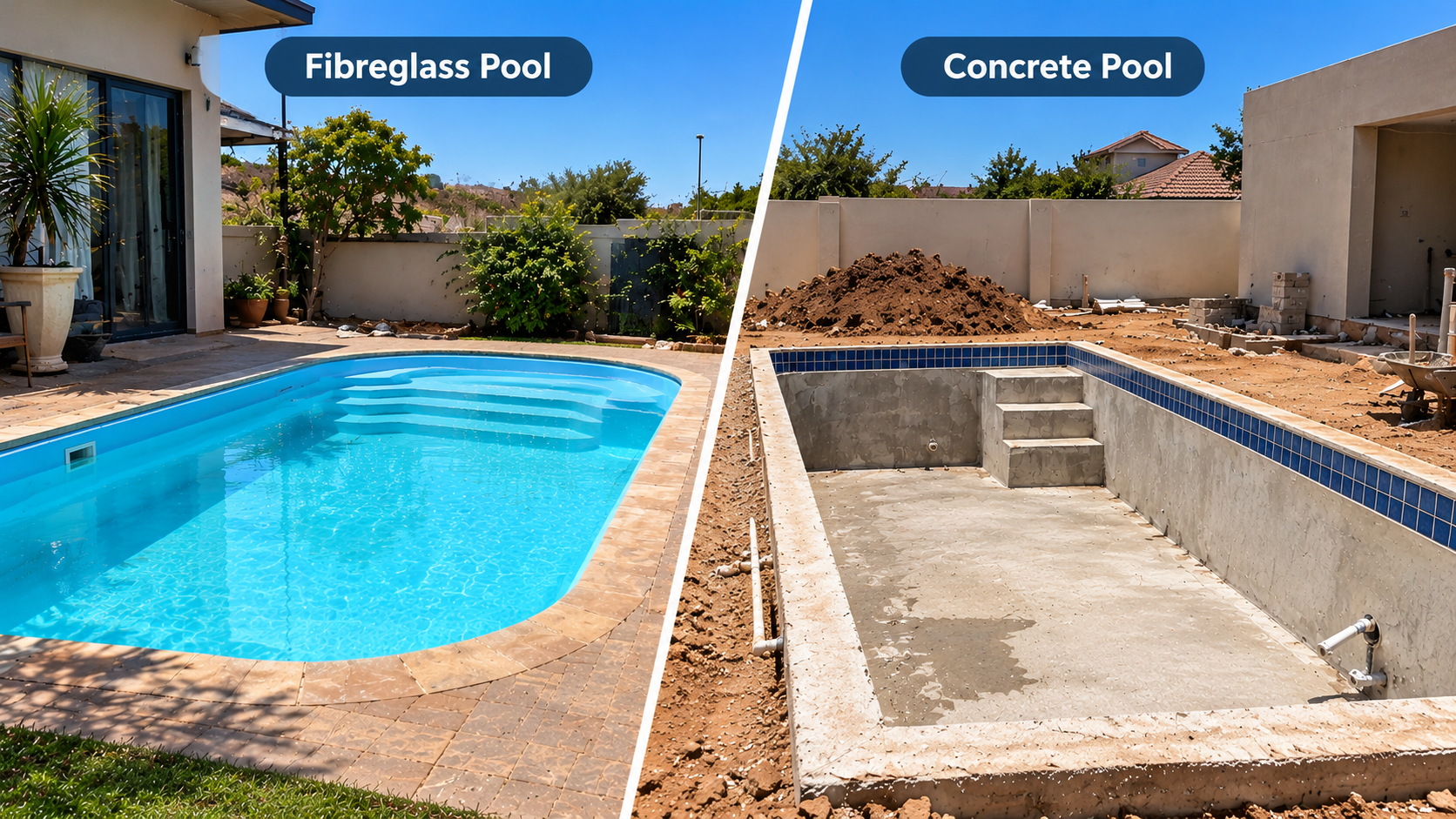
Choosing between a fibreglass pool and a concrete pool is an important decision when planning a swimming pool for your property. Both options can provide years of enjoyment, but they differ in how they are constructed, the designs available, the maintenance they require and the types of repairs they may need over time.
For homeowners in Namibia, the decision involves more than choosing a pool that looks attractive. The local climate, ground conditions, available space, installation requirements and long-term maintenance costs all deserve consideration. A pool must be suitable for the property, practical to maintain and designed to meet the needs of the people who will use it.
Fibreglass pools are manufactured with a preformed shell that is transported to the property and installed in an excavated area. Concrete pools, on the other hand, are constructed on-site, allowing greater flexibility in their shape, dimensions and depth. Each approach has advantages, and neither is automatically the right choice for every homeowner.
At Premium Pools Namibia, we understand that selecting a pool involves balancing appearance, budget, practicality and long-term value. Understanding the differences between fibreglass and concrete pools can help you make a more informed decision before committing to construction.
Let's Discuss Your Swimming Pool Plans
Still deciding between fibreglass and concrete? Tell us about your property, preferred design and priorities, and we can discuss the factors to consider when planning your swimming pool.
What Is a Fibreglass Swimming Pool?
A fibreglass swimming pool is manufactured as a single, preformed shell. The shell is typically made from layers of reinforcing materials and resin, with a finished interior surface designed for use in a swimming pool.
Rather than building the entire pool structure on-site, the installer excavates the ground, prepares a suitable base and positions the manufactured shell in the prepared area. Plumbing, backfilling, levelling and the surrounding finishes are then completed as part of the installation.
Because the shell is manufactured before it reaches the property, the available shapes, sizes, depths and built-in features depend on the manufacturer’s product range. Many designs include integrated steps, seating areas or other features moulded into the shell.
One of the main attractions of fibreglass is its relatively smooth interior surface. This can make routine cleaning easier, although proper water chemistry and regular maintenance remain essential.
Fibreglass pools can be suitable for homeowners who want a pool with a relatively straightforward installation process and are happy to choose from available shell designs. However, the site must be accessible enough for the shell to be delivered and positioned safely, and the excavation and supporting ground must be prepared correctly.
The quality of the shell, installation workmanship, drainage arrangements and ongoing maintenance all influence the pool’s long-term performance.
What Is a Concrete Swimming Pool?
A concrete swimming pool is constructed on-site rather than delivered as a completed shell. Its structure is formed using reinforced concrete or an appropriate sprayed-concrete construction method, depending on the design and building approach.
The pool is excavated, its structural components are built, and the interior is finished with a suitable pool coating, plaster, tiles or another specified material. The exact construction process depends on the design, engineering requirements and finish selected.
Concrete offers considerable design flexibility. The pool can be planned around the available space, preferred dimensions, desired depth and particular architectural features. This makes it attractive for properties where a standard manufactured shell would not meet the owner’s requirements.
A concrete pool can incorporate features such as built-in seating, integrated steps, unusual outlines, different depths and more complex shapes. These features need to be incorporated into the design and construction plan rather than treated as afterthoughts.
However, concrete construction generally involves more on-site work and coordination. Excavation, structural construction, plumbing, finishing and curing requirements all contribute to the project timeline.
The finished interior surface also influences the pool’s maintenance requirements. A tiled finish, plaster finish and painted surface do not all behave in the same way, so the maintenance and eventual renovation needs depend partly on the material selected.
Concrete pools are particularly appealing to homeowners who prioritise customisation and are prepared to plan for the construction work and maintenance associated with their chosen design.
Fibreglass vs Concrete Pools: The Main Differences
Both pool types can be suitable for residential properties in Namibia, but the differences become clearer when comparing installation, design, surface maintenance and long-term ownership.
Construction: A fibreglass pool uses a manufactured shell installed on-site, while a concrete pool is built on-site.
Design options: Fibreglass pool shapes and sizes depend on available shell designs. Concrete pools offer extensive flexibility in shape, size and depth.
Installation process: Fibreglass pool installation is often shorter when access and site conditions are suitable. Concrete pool installation generally involves more construction stages.
Interior surface: Fibreglass pools typically have a smooth, finished fibreglass surface. Concrete pools depend on the selected plaster, tile or coating.
Routine cleaning: A smooth fibreglass surface can make brushing easier. Concrete pool maintenance depends partly on the chosen finish.
Surface repairs: Fibreglass pool repairs depend on the shell and type of damage. Concrete pool repairs depend on the structural condition and interior finish.
Custom features: Fibreglass pool features are limited by the manufactured shell. Concrete pools offer greater scope for integrated and customised features.
Site access: Fibreglass pool delivery and positioning must be possible. For concrete pools, materials and construction equipment must be able to reach the site.
Long-term maintenance: Fibreglass pools require water treatment, equipment servicing and shell care. Concrete pools require water treatment, equipment servicing and care of the selected finish.
Best suited to: Fibreglass pools are best suited to homeowners comfortable with available shell designs. Concrete pools are best suited to homeowners who need greater design flexibility.
These are general differences rather than guarantees about every pool. Manufacturing quality, installation standards, the pool’s design and the materials used can influence the final outcome.
1. Installation Time: Which Pool Is Faster to Build?
The time required to install a pool can affect your budget, landscaping plans and expectations about when the pool will be ready to use.
Fibreglass pools are often associated with shorter installation periods because the shell is manufactured before work begins on the property. Once the excavation and base preparation are complete, the shell can be positioned, connected to the relevant plumbing and incorporated into the remaining installation work.
However, this does not mean that every fibreglass pool can be installed quickly. Transport arrangements, site access, excavation conditions, weather, plumbing, backfilling and surrounding paving can all affect the schedule.
A concrete pool generally involves more construction stages. The structural work must be completed correctly, and the concrete and selected finishes must be allowed to reach the appropriate condition before the pool is filled and commissioned. The precise sequence and timing depend on the construction method and materials.
Custom features can also add complexity. An unusual shape, integrated seating, specialised finishes or additional surrounding structures may require more planning and coordination.
What can delay either installation?
Regardless of the pool type, delays may arise from unexpected ground conditions, access difficulties, changes to the design, plumbing adjustments, material availability or incomplete site preparation.
For fibreglass installations, transporting a large shell to the property can be a significant consideration. A narrow entrance, overhead obstruction or limited space for positioning equipment may complicate delivery.
For concrete installations, excavation, structural work, finishing and curing requirements can have a greater influence on the overall timeline.
When comparing quotations, ask for an explanation of the main stages and what must be completed before the pool is ready for use. A realistic schedule is more useful than choosing a pool based solely on an advertised installation time.
2. Initial Cost: Are Fibreglass Pools Cheaper Than Concrete Pools?
Cost is often one of the biggest considerations when deciding between fibreglass and concrete pools. However, it is not possible to determine which option will be cheaper for every project simply by comparing the pool types.
The total cost depends on the pool’s size, the condition of the site, access requirements, equipment, finishes and the amount of landscaping needed.
What affects the cost of a fibreglass pool?
The price of a fibreglass pool is influenced by the shell’s size and design, transport requirements and the installation work required on the property.
The quotation should account for the excavation, preparation of the base, delivery and positioning of the shell, plumbing, filtration equipment and any agreed finishing work.
Site access is particularly important. If the shell cannot be delivered and positioned using the expected approach, additional arrangements may be required. Difficult excavation conditions or additional ground preparation can also affect the cost.
The surrounding area should be considered separately where necessary. Paving, coping, drainage, fencing, lighting and landscaping can add substantially to the overall project budget.
What affects the cost of a concrete pool?
Concrete pool costs depend on the dimensions, structural design, excavation, reinforcement, concrete work, plumbing and selected interior finish.
More complex designs generally require additional planning and construction. Features such as multiple depths, unusual outlines, built-in seating and extensive tiling can increase the amount of labour and material involved.
The finish selected is another important consideration. Different materials have different installation requirements, cleaning needs and future renovation costs.
Concrete construction can also involve additional coordination between the people responsible for structural work, plumbing and finishing. The scope of these services should be clear in the quotation.
Compare the complete project, not just the shell or structure
When comparing fibreglass and concrete quotations, make sure the figures cover comparable work. One quotation may include filtration equipment and basic coping, while another may cover only the pool structure.
Ask whether the following are included or priced separately:
-
Excavation and removal of excavated material.
-
Ground preparation and any necessary drainage provisions.
-
The pool shell or structural construction.
-
Plumbing, circulation and filtration equipment.
-
Electrical work and lighting, where required.
-
Coping, paving and other surrounding finishes.
-
Fencing and other applicable safety requirements.
-
Filling, commissioning and initial water treatment.
-
Landscaping and reinstatement of the affected area.
Comparing the full scope helps you understand what you are paying for and reduces the risk of unexpected expenses during installation.
A fibreglass pool may offer an attractive overall cost for a suitable site and a standard design. A concrete pool may justify its higher project cost where the design requires greater flexibility. The right comparison is based on the finished pool you want, not simply the material used to construct it.
Request a Swimming Pool Installation Consultation
Planning a new pool and unsure which construction method is right for your property? Share your requirements and let us discuss the options with you.
3. Durability: Which Pool Type Lasts Longer?
Both fibreglass and concrete pools can provide long-term use when they are designed, installed and maintained appropriately. However, their materials behave differently, and the type of deterioration they may experience is not the same.
It is therefore more useful to consider how each pool is constructed, what can affect its condition and how well the installation suits the property than to assume that one type will always last longer.
Fibreglass pool durability
A fibreglass pool relies on the integrity of its manufactured shell and finished surface. The shell must be transported, handled and installed correctly, with appropriate support and attention to the ground conditions.
Problems can develop if the shell is damaged during handling, the base is inadequately prepared or the installation does not account for the relevant groundwater and drainage conditions.
The surface can also deteriorate over time. Depending on the product and circumstances, owners may notice discolouration, staining, blistering or other finish problems.
These issues do not mean that fibreglass pools are inherently fragile. They demonstrate why shell quality, correct installation and appropriate maintenance matter.
Concrete pool durability
Concrete pools rely on the quality of the structural construction, reinforcement, waterproofing details where specified and the selected interior finish.
A properly designed and constructed concrete pool can be robust. However, cracking, water penetration, deterioration of the finish or movement in the surrounding ground may create problems that require investigation.
A crack in the interior finish is not necessarily the same as a crack through the structural shell. Establishing the nature of the damage is essential before deciding how it should be repaired.
Concrete pools can also require periodic renovation of their interior surfaces, depending on the finish and how it has been maintained.
The importance of installation quality
For both pool types, workmanship is one of the most important factors influencing durability.
A high-quality shell installed incorrectly can develop problems. Likewise, a concrete pool with an unsuitable design, poor construction practices or inadequate attention to site conditions may require repairs earlier than expected.
Before construction begins, the installer should consider ground conditions, drainage, access, the intended pool design and the requirements of the chosen construction method.
The best pool is not simply the one made from a particular material. It is the one that is appropriate for the property and installed to a suitable standard.
4. Maintenance Requirements: Which Pool Is Easier to Maintain?
Every swimming pool requires ongoing care. The water must be tested and treated, debris removed, filtration equipment maintained and the pool structure inspected.
The main difference between fibreglass and concrete pools is how their interior surfaces influence cleaning and long-term maintenance.
Maintaining a fibreglass pool
Fibreglass pools generally have a smooth interior surface that can make routine brushing and cleaning easier. The finish can be less prone to some forms of surface accumulation than rougher surfaces, although algae can still grow if water treatment and circulation are inadequate.
Owners should maintain appropriate water chemistry, clean baskets and filters, monitor the pump and inspect the shell for visible changes.
The interior surface should also be treated according to the manufacturer’s recommendations. Unsuitable cleaning products or abrasive methods may damage the finish.
If the surface develops blistering, discolouration or other deterioration, the cause should be established before repair work begins. A cosmetic treatment may not be appropriate if the problem originates beneath the surface.
Maintaining a concrete pool
Concrete pool maintenance depends significantly on the interior finish.
A properly maintained tiled finish, for example, has different cleaning requirements from plaster or a painted surface. Some finishes may be more susceptible to deposits or roughness, while others require particular care to preserve their appearance.
Concrete pools should be brushed and cleaned regularly, and the water chemistry should be maintained appropriately. The surface, grout and surrounding fittings should also be inspected for deterioration.
If the finish becomes rough, begins to flake or develops persistent staining, investigate the cause before using aggressive cleaning methods.
Which requires less work?
Fibreglass pools often have an advantage when it comes to routine surface cleaning because of their smooth finish. However, this does not eliminate the need for regular maintenance or guarantee lower costs in every situation.
Concrete pool maintenance varies according to the finish, pool design and water conditions. A well-maintained concrete pool with a suitable finish can also remain functional and attractive for many years.
When choosing between the two, consider how much time you want to spend on routine care and whether you are comfortable with the future maintenance requirements of the finish you select.
5. Design Flexibility: Can You Customise the Pool?
Design is one of the clearest differences between fibreglass and concrete pools.
A pool should suit the available space, the property’s layout and the way the household intends to use it. Some homeowners want a straightforward rectangular pool for exercise and recreation, while others prefer a more distinctive design that integrates with the architecture and landscaping.
Design options for fibreglass pools
Fibreglass pools are available in a range of manufactured shapes and sizes. Depending on the product range, options may include rectangular designs, curved outlines, built-in steps, seating and different depths.
The main limitation is that the shell’s dimensions and features are determined before it arrives on-site. Although surrounding landscaping and finishes can be customised, the shell itself cannot generally be altered freely without compromising its design.
This makes fibreglass suitable for homeowners who can find a manufactured design that meets their requirements.
The available models should be reviewed carefully to ensure that the pool is large enough, provides suitable access and fits the property without creating unnecessary compromises.
Design options for concrete pools
Concrete construction allows the pool to be designed around the property rather than requiring the property layout to accommodate a preformed shell.
The design can incorporate a particular length, width, depth, outline or arrangement of steps and seating, subject to engineering, construction and site constraints.
This flexibility can be useful on properties with unusual layouts or where the pool needs to integrate with existing outdoor features.
However, additional design freedom may involve greater planning, construction time and cost. Complex features must be designed and built correctly, and their long-term maintenance should be considered before they are included.
Which design approach is better?
If you are happy with an available shell design and want a relatively straightforward layout, fibreglass may be suitable.
If the pool needs to fit a specific space, incorporate unusual dimensions or accommodate more complex features, concrete may offer greater flexibility.
The best decision begins with the intended use of the pool and the constraints of the property. Choosing a design before considering access, site conditions and the available budget can lead to avoidable complications.
6. Surface Comfort and Appearance
The surface of a swimming pool affects its appearance, how it feels underfoot and how easily it can be cleaned.
Fibreglass pools generally have a smooth, manufactured interior finish. This can be comfortable for swimmers and may make routine cleaning less demanding. The appearance and surface characteristics depend on the particular shell and finish.
Concrete pools can have a wider range of interior finishes, including plaster-based surfaces, tiles and specialised coatings. These offer different visual effects and maintenance requirements.
Tiles can provide colour and design flexibility, while other finishes may create a more uniform appearance. However, the surface must be suitable for use in a swimming pool and installed according to the relevant material requirements.
Surface comfort also depends on workmanship and the condition of the finish. A deteriorating or rough surface can be uncomfortable regardless of the pool’s construction type.
Before choosing a finish, consider appearance, maintenance, expected wear, repair options and how the surface may change over time.
7. Repairs: What Happens When Something Goes Wrong?
No pool type is completely maintenance-free or immune to damage. Both fibreglass and concrete pools may require repairs, but the appropriate method depends on the materials involved and the source of the problem.
Repairs to fibreglass pools
Potential issues include surface deterioration, localised damage to the shell, plumbing leaks and faults in the pump or filtration system.
Some surface damage can be repaired using suitable fibreglass repair methods. However, the affected area must be assessed to establish the extent of the damage and whether the underlying shell has been compromised.
A superficial repair may be appropriate for limited finish damage, while deeper damage may require more extensive work by a specialist.
It is important to distinguish between a problem with the pool shell and a leak originating in the plumbing or fittings. Repairing the wrong component will not solve the underlying issue.
Repairs to concrete pools
Concrete pools may require attention to cracks, damaged tiles, deteriorating plaster or coatings, plumbing leaks and equipment faults.
The appropriate repair depends on the type of damage. A crack in the surface finish may require a different approach from a crack affecting the structural shell.
Likewise, replacing loose tiles may not resolve the problem if movement or deterioration beneath the tiles is responsible for the damage.
Where structural cracking or unexplained water loss occurs, the cause should be investigated before repair work is undertaken.
Which pool is easier to repair?
There is no single answer. The difficulty and cost of repairs depend on the nature of the fault, the accessibility of the affected area, the materials involved and the availability of appropriate repair expertise.
For either pool type, identifying the cause before carrying out work is essential. A repair that only covers visible damage may provide temporary improvement without addressing the underlying problem.
8. How Namibia’s Conditions Affect Your Choice
Namibia’s environmental conditions should form part of the planning process when selecting a swimming pool. Heat, sunlight, wind, dust, groundwater and local ground conditions can influence installation requirements and ongoing maintenance.
Heat and sunlight
High temperatures can increase evaporation and affect how frequently the pool needs to be topped up. Strong sunlight can also influence water treatment requirements and contribute to the ageing of some exposed materials.
Neither fibreglass nor concrete automatically eliminates these challenges. Both require appropriate water management and maintenance.
Wind and dust
Dust and airborne debris can increase the demand on skimmers, baskets and filters. A pool positioned in an exposed area may require more frequent cleaning than one sheltered by the property’s layout.
The pool’s shape and surrounding landscaping can influence how easily debris is removed. For example, complex corners and recessed features may require more attention during cleaning.
Ground conditions and drainage
The site should be assessed before either pool type is selected.
Fibreglass shells require appropriate excavation, support and attention to groundwater and drainage conditions. Incorrect preparation can affect the shell’s stability and performance.
Concrete pools also need suitable structural design and construction for the site. Ground movement, poor drainage and other site-specific conditions may affect the structure and surrounding finishes.
The appropriate measures depend on the property’s actual conditions, so it is important not to assume that one pool type will suit every site in Namibia.
Water availability
Water use is another practical consideration. Both types of pool lose water through evaporation and may require topping up, while splashing, backwashing and leaks can contribute to additional losses.
Pool size, exposure to wind and sunlight, maintenance practices and equipment all influence water demand. Choosing an appropriately sized pool and maintaining it correctly can help avoid unnecessary water loss.
9. Installation Access and Property Layout
A pool may look suitable on paper but prove difficult to install because of the property’s layout.
This is particularly important when considering fibreglass because the manufactured shell must be transported to the site and positioned in the excavation. Narrow entrances, overhead obstructions, boundary walls and limited working space can complicate delivery.
In some cases, specialised lifting equipment may be needed, depending on the shell dimensions and site access. This can affect the installation arrangements and overall cost.
Concrete pools are constructed on-site, which may offer greater flexibility where access is restricted. However, construction still requires access for excavation equipment, concrete, reinforcement, plumbing materials and workers.
The surrounding area must also be considered. Existing buildings, underground services, boundary structures and landscaping may influence the excavation and construction plan.
Before committing to either option, have the proposed pool location assessed. Confirm that the shell can be delivered if you choose fibreglass, or that the necessary construction activities can be completed if you choose concrete.
10. Long-Term Costs and Value for Money
The initial installation cost is only one part of owning a swimming pool. Over time, owners also need to account for water treatment, electricity, equipment servicing, cleaning, repairs and eventual surface work where required.
Fibreglass pools may benefit from a smooth surface that is relatively easy to clean. However, their long-term costs still depend on the shell’s quality, installation, pump and filtration equipment, water chemistry and any repairs that become necessary.
Concrete pools may require more attention to their interior finish, depending on the material selected. Some finishes may need restoration or replacement as they age, while structural or plumbing repairs can also contribute to long-term expenditure.
These differences do not mean that every fibreglass pool is cheaper to own or that every concrete pool is expensive to maintain. Actual costs vary according to the pool, the quality of construction, the maintenance routine and the conditions in which it operates.
How to compare long-term value
When evaluating your options, consider the expected ownership costs rather than focusing only on the installation quotation.
Think about the following:
-
The initial construction or installation cost.
-
The pool’s expected water and electricity requirements.
-
Routine cleaning and water treatment.
-
The type of filtration and circulation equipment.
-
The maintenance requirements of the chosen interior finish.
-
Potential repair work and access to suitable repair services.
-
The landscaping and surrounding structures included in the project.
Ask the installer about the maintenance recommended for the specific pool model or finish. Manufacturer guidance can help establish what care is required and which cleaning products or repair methods are suitable.
A pool that fits your budget at installation but does not suit your maintenance preferences may become less attractive over time. Choosing a design and construction method that aligns with your long-term plans is an important part of obtaining value.
11. Which Pool Type Is Better for Different Homeowners?
The best option depends on your priorities rather than a universal rule that one material is better than the other.
A fibreglass pool may suit you if:
-
You prefer an available manufactured shape and size.
-
A relatively straightforward installation process is important.
-
You value a smooth interior surface that can make cleaning easier.
-
The property provides suitable access for delivering and positioning the shell.
-
You want to compare established shell designs before making a decision.
The suitability of a fibreglass pool still depends on the site, shell quality, installation requirements and the available budget.
A concrete pool may suit you if:
-
You want greater flexibility over the pool’s dimensions and shape.
-
The property has an unusual layout or specific design requirements.
-
You want to incorporate customised depths, steps, seating or other features.
-
You have a particular finish or architectural style in mind.
-
You are prepared to plan for the construction process and ongoing care of the selected finish.
Concrete offers design freedom, but the additional construction requirements should be considered carefully when preparing the budget and schedule.
Neither list should replace a site assessment. The most appropriate choice depends on what can be built safely and practically on your property.
Questions to Ask Before Choosing a Pool
Before signing an installation agreement, ask questions that help you understand the complete project and the responsibilities involved.
What does the quotation include? Establish whether excavation, the pool structure, plumbing, filtration equipment, coping, paving and commissioning are included or priced separately.
Is the proposed design suitable for the site? Ask how ground conditions, drainage, access and nearby structures will affect the installation.
What maintenance will the pool require? Find out how the interior finish should be cleaned, how often the water should be tested and what routine equipment servicing involves.
What happens if repairs are needed? Ask about the available repair options for the chosen pool type, what the installation or product warranty covers and which maintenance practices are required.
What is the expected installation schedule? Request a realistic explanation of the construction stages, including site preparation, finishing and any necessary curing or commissioning periods.
What safety requirements apply? Discuss the applicable requirements for pool barriers, gates and other safety measures before construction begins.
Clear answers to these questions can help you compare options fairly and understand what ownership will involve after the installation is complete.
Our Recommendation: Choose the Pool That Suits Your Property
Fibreglass and concrete pools can both be excellent choices for homeowners in Namibia. The important consideration is how well the chosen pool matches the property’s conditions, the household’s needs and the available budget.
Fibreglass offers the convenience of a manufactured shell, a smooth interior surface and a relatively straightforward installation process when the site is suitable. Its main design limitation is that the shell’s shape and dimensions must be selected from the available range.
Concrete offers greater freedom in design, size, depth and integrated features. It can be a strong option for homeowners who need a customised pool, although the construction process and maintenance requirements of the selected finish need careful consideration.
In either case, the quality of installation matters. Suitable site preparation, good workmanship, appropriate equipment and regular maintenance all contribute to the pool’s performance over time.
At Premium Pools Namibia, we believe the decision should begin with your needs and the realities of your property. Comparing the complete installation, maintenance requirements and long-term costs will help you select an option that makes sense for your circumstances.
Final Thoughts
Choosing between a fibreglass pool and a concrete pool is about more than appearance or the initial price. Both options require suitable planning, correct installation and regular maintenance, but their construction methods, design flexibility and surface care differ.
A fibreglass pool may be the right choice if an available shell meets your needs and your property can accommodate its delivery and installation. A concrete pool may be more suitable if you want a customised design or need the pool to fit a specific space.
Namibia’s climate, the property’s ground conditions, access, water management and long-term maintenance requirements should all form part of the decision. Taking these factors into account before construction begins can help you avoid unnecessary complications and choose a pool that suits your lifestyle.
If you are planning a new swimming pool, Premium Pools Namibia can help you consider the practical factors involved in choosing an appropriate option for your property.
Request a Swimming Pool Installation Consultation
Planning a new pool and unsure which construction method is right for your property? Share your requirements and let us discuss the options with you.

Comments are closed