


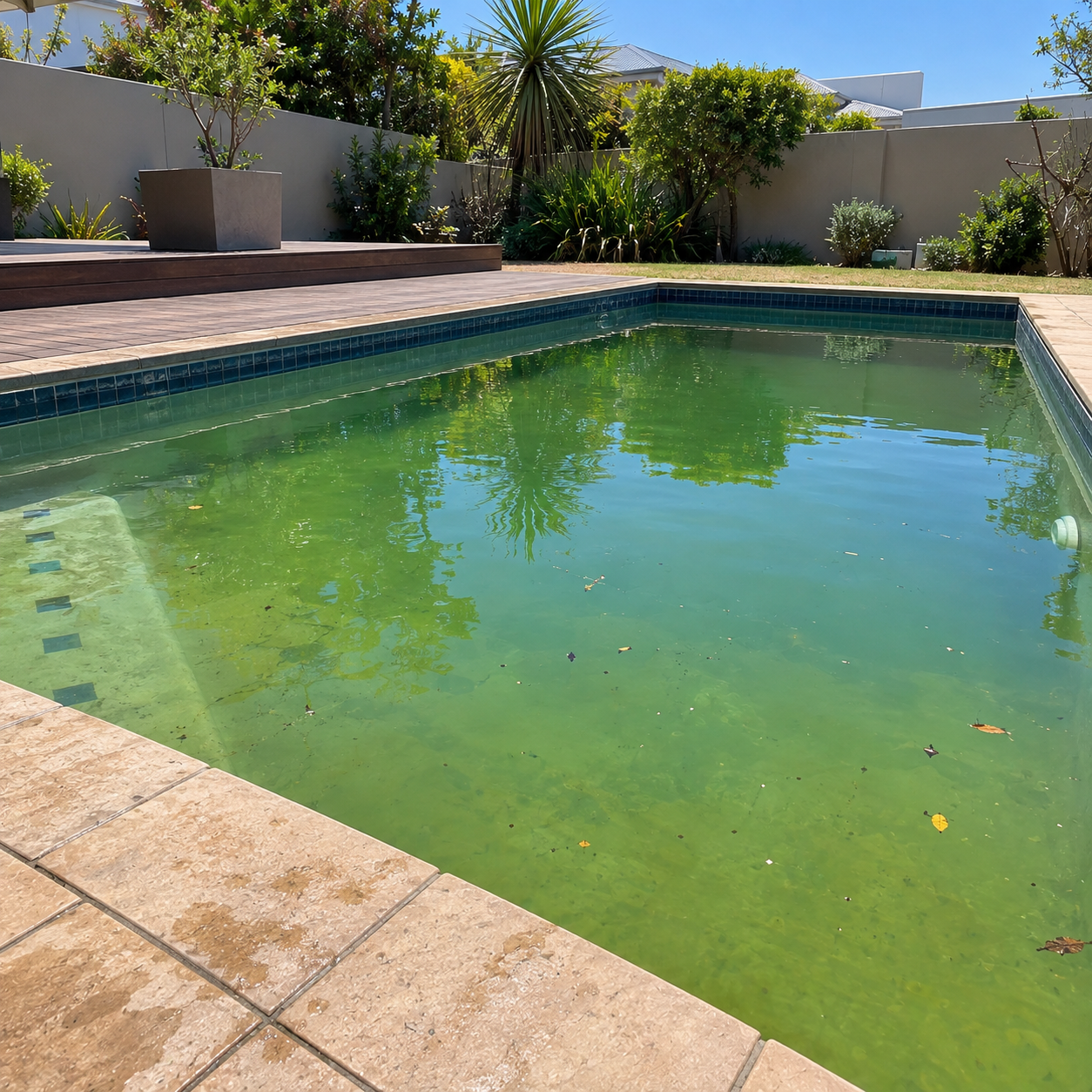
Few things are as frustrating as treating a swimming pool, watching the water improve, and then finding it green again a few days later. You may have added chlorine, brushed the walls, removed debris and run the pump for hours, yet the water still refuses to stay clear.
When this happens repeatedly, it is tempting to assume that the pool simply needs more chlorine. However, recurring green water is not always caused by insufficient chlorine alone. The problem may involve water chemistry, excessive stabiliser, inadequate circulation, ineffective filtration or algae that has not been completely removed. In some cases, the green colour may even be caused by dissolved metals rather than algae.
The important thing is to understand why the water keeps changing colour instead of repeating the same treatment without checking whether it is addressing the underlying problem.
For swimming pool owners in Namibia, this is particularly relevant during hot, sunny periods when outdoor pools are exposed to strong sunlight, windblown dust, leaves and regular swimming activity. These conditions can increase the demands placed on the pool’s sanitation and filtration systems.
A swimming pool that repeatedly turns green needs a more thorough assessment of its water condition, treatment history and equipment performance. Once the cause is understood, the appropriate corrective measures can be taken to restore the water and reduce the likelihood of another outbreak.
Get Help With Recurring Green Pool Water
Is your pool turning green despite treatment? Fill in the form below and submit your details so Premium Pools Namibia can discuss the problem and the next steps.
Why Does a Swimming Pool Turn Green?
Green swimming pool water is commonly associated with algae growth. Algae are microscopic organisms that can multiply when conditions in the pool allow them to thrive. They may remain suspended in the water, making it appear cloudy or green, or attach themselves to the pool’s walls, floor, steps and other submerged surfaces.
In a properly maintained chlorinated pool, the sanitising system helps control algae and other microorganisms. However, when chlorine becomes insufficient or less effective, algae can begin multiplying. If the growth becomes extensive, the water may turn noticeably green and lose its clarity.
Algae growth is not necessarily caused by one isolated problem. Several factors can contribute at the same time. For example, a pool may have a low chlorine level, a high pH and poor circulation in certain areas. Correcting only one of these conditions may improve the water temporarily without resolving everything that contributed to the outbreak.
The treatment history also matters. A pool that has been repeatedly treated with the same chlorine product may have accumulated stabiliser, while a pool with a faulty filtration system may struggle to remove the algae and debris left behind after treatment.
There is also an important distinction between killing algae and clearing the water. Chlorine can help control the organisms, but the resulting particles still need to be removed through filtration and appropriate cleaning. If this step is neglected, the water may remain cloudy or discoloured even after the treatment has started working.
Understanding these differences helps explain why some pools clear quickly while others continue to turn green despite repeated chemical treatment.
The Chlorine Level May Be Falling Too Quickly
Chlorine is essential for maintaining the sanitation of conventional chlorinated swimming pools. It helps control algae and other microorganisms, but its concentration changes as it reacts with contaminants and is exposed to environmental conditions.
In an outdoor pool, sunlight can break down chlorine over time. Organic material such as leaves, dust and other debris also contributes to the demand placed on the sanitising system. Swimmers introduce additional contaminants, which can further affect chlorine levels.
When the available chlorine falls too low, algae may begin growing again. This can happen after a pool has been treated successfully if the chlorine level is not maintained afterwards.
For example, a pool owner may treat green water and notice a significant improvement the following day. However, if the chlorine concentration subsequently drops below what is required for the pool’s conditions, surviving algae or new growth may cause the water to become green again.
This is why a single chlorine treatment does not necessarily resolve a persistent algae problem.
What should be checked?
The free chlorine level should be tested using an appropriate pool water testing method. The result helps determine how much available chlorine remains in the water and whether the pool is being adequately sanitised.
The required level depends on the pool’s conditions, the treatment system and the concentration of cyanuric acid where stabiliser is used. If the pool is already green, the treatment may need to address active algae growth rather than simply restore routine chlorine levels.
Once the immediate problem has been addressed, regular testing is important because chlorine demand can change with weather, pool use and contamination.
Adding chlorine without testing the water can lead to inconsistent results. Too little may fail to control the algae, while excessive or inappropriate dosing can create other problems and may delay the safe return of swimmers.
High pH Can Reduce Chlorine Effectiveness
Another reason a swimming pool may keep turning green is an unsuitable pH level.
The pH of pool water influences how effectively chlorine works. When pH rises, a smaller proportion of the available chlorine is present in its more active form. This can reduce the effectiveness of disinfection, making it more difficult to control algae growth under certain conditions.
For many conventional chlorinated swimming pools, a pH range of approximately 7.2 to 7.6 is commonly targeted. The appropriate operating range should be confirmed against the pool’s treatment system and product guidance. The US Centers for Disease Control and Prevention recommends a pH range of 7.0 to 7.8 for swimming pool disinfection and swimmer comfort.
A pool can therefore contain chlorine without receiving the level of sanitising performance expected. If pH is too high, simply adding more chlorine may not be the most effective way to correct the situation.
Pool water balance also affects other aspects of pool maintenance. Depending on the water chemistry, unsuitable pH can contribute to scaling, cloudy water or conditions that affect surfaces and equipment.
However, pH should not be adjusted based on appearance alone. The water must be tested first so that any correction is appropriate for the actual condition of the pool.
If your pool keeps turning green after treatment, checking pH alongside free chlorine can help establish whether the water chemistry is contributing to the recurring problem.
Excessive Chlorine Stabiliser May Be Part of the Problem
Cyanuric acid, commonly called chlorine stabiliser, helps protect chlorine from being broken down rapidly by sunlight. It is useful in many outdoor pools because it helps chlorine remain available for longer.
The difficulty arises when stabiliser accumulates beyond an appropriate level. This can happen when stabilised chlorine products are used repeatedly without monitoring the concentration already present in the water.
As stabiliser levels increase, chlorine’s effectiveness against microorganisms can be reduced. The relationship between free chlorine and cyanuric acid therefore matters when diagnosing persistent algae growth.
This can create a frustrating cycle. A pool owner adds chlorine because the water is green, sees some improvement and then finds the algae returning. More chlorine is added, but the underlying stabiliser problem remains unresolved.
Stabiliser cannot be assessed reliably from the water’s appearance. It needs to be measured with an appropriate test.
If the concentration is excessive, corrective action may involve partially replacing the pool water, depending on the test results and the pool’s circumstances. The appropriate approach depends on the existing stabiliser level, the water source and other relevant conditions.
This is particularly worth investigating when the pool has a history of repeated treatments using stabilised chlorine products.
The Filter May Be Unable to Clear the Water
Chemical treatment is only one part of restoring a green swimming pool. Once algae has been controlled, the remaining material needs to be removed from the water.
The filtration system plays a central role in this process. It circulates water through the filter, helping remove suspended particles and other material that would otherwise remain in the pool.
If the filter is dirty, blocked, incorrectly operated or not performing properly, the pool may remain cloudy even after the algae has been treated. In some cases, the water appears to improve initially but then deteriorates again because the filtration problem has not been addressed.
A significant algae outbreak can also place extra demands on the filtration system. Depending on the type of filter and the treatment used, the filter may require cleaning or servicing before it can operate effectively again.
Several symptoms can indicate that filtration needs attention:
-
The water remains cloudy after treatment, even when visible algae growth has reduced.
-
Water returning through the pool’s outlets is weaker than usual.
-
Filter pressure is unusually high or differs significantly from its normal operating level.
-
Debris continues circulating rather than being removed effectively.
-
The pool takes an unusually long time to clear after cleaning and treatment.
These symptoms are not conclusive proof that the filter is faulty. They indicate that the system should be assessed alongside the water chemistry.
Sand filters, cartridge filters and other filtration systems have different maintenance requirements. Cleaning, backwashing and replacing filter media must be carried out according to the equipment’s design and manufacturer instructions.
Repeatedly adding chemicals will not correct a filter that cannot remove suspended material effectively. If filtration remains inadequate, the pool may continue to look cloudy or dirty even when the treatment itself is appropriate.
Poor Circulation Can Allow Algae to Return
A swimming pool depends on effective water circulation to distribute chemicals and move water through the filtration system.
When circulation is poor, certain parts of the pool may receive less effective treatment. Water can move more slowly around corners, behind steps, near ladders and in other areas where the flow is restricted.
These areas can become more vulnerable to algae growth, particularly when the chlorine level is already inadequate or the pool surfaces have not been cleaned thoroughly.
Poor circulation can have several causes. A blocked skimmer basket, debris in the pump basket, restricted pipework, air entering the system or a pump that is not performing properly can all affect water movement.
The pump operating schedule also matters. The appropriate operating time depends on the pool’s volume, equipment, usage and environmental conditions. A fixed number of hours is not suitable for every pool.
Pool owners should check that the pump is operating normally, the water level is appropriate and the baskets are not obstructed. The return outlets should also be checked for normal flow.
If water movement remains weak, the pump and associated plumbing may need further inspection. Identifying the cause of poor circulation is more useful than continuing to add chemicals while the water is not moving through the system as intended.
Algae May Still Be Attached to the Pool Walls and Floor
A swimming pool can develop recurring green water when algae remains attached to surfaces after treatment.
Algae may be present along the waterline, on steps, in corners, on the floor or around fittings. These areas can be overlooked when the pool is cleaned, allowing remaining growth to contribute to another outbreak.
Brushing helps loosen algae and deposits so they can be removed through filtration or appropriate vacuuming. The brush must be suitable for the pool finish, as some surfaces can be damaged by abrasive cleaning tools.
Concrete, fibreglass and other pool finishes may require different brushes and cleaning methods. Using the wrong equipment can damage the surface or affect the finish.
Cleaning also needs to be coordinated with the treatment process. Brushing may release material into the water, so adequate filtration and removal of debris are necessary afterwards.
If algae keeps appearing in the same places, consider whether those areas have sufficient water circulation and whether the original treatment reached the full extent of the growth.
The objective is not simply to remove visible green patches. It is to eliminate the conditions that allow algae to remain and grow again.
Namibia’s Climate Can Increase the Demands on Pool Maintenance
Outdoor swimming pools are exposed to environmental conditions that can affect water quality. In Namibia, strong sunlight, warm temperatures, windblown dust and organic debris can increase the demands placed on pool maintenance.
Sunlight can break down chlorine, while dust, leaves and other contaminants introduce material that needs to be removed from the water. Swimming activity also increases the demand on the sanitising system.
These factors do not mean that every pool needs the same chemical dosage or filtration schedule. The correct maintenance approach depends on actual water readings, the pool’s equipment, the surrounding environment and how frequently it is used.
A pool that remains clear during cooler periods may need closer monitoring during hotter weather. After a dusty spell or a period of heavy use, the water may require additional testing and cleaning.
Regular maintenance is especially useful because algae can become more difficult to control once it has spread throughout the pool. Detecting a falling chlorine level or a developing circulation problem early may prevent a more extensive treatment from becoming necessary.
Pool owners should therefore treat water testing as part of routine maintenance rather than something to do only when the pool starts looking green.
Get Help With Recurring Green Pool Water
Is your pool turning green despite treatment? Fill in the form below and submit your details so Premium Pools Namibia can discuss the problem and the next steps.
Green Water Is Not Always Caused by Algae
Although algae is a common cause of green swimming pool water, other conditions can produce a similar appearance.
Dissolved metals, particularly copper, can cause green or blue-green discolouration under certain water conditions. Metals may enter the pool through the source water, some pool products or corrosion within parts of the system.
When chlorine or another oxidising treatment is added, the chemical form of these metals can change, potentially causing visible discolouration or staining.
This is an important distinction because metal-related discolouration may not respond to repeated algae treatment in the expected way.
There are some clues that can help guide the investigation. Algae commonly causes cloudy water or visible green deposits on pool surfaces. Metal-related discolouration may appear without the same pattern of algae growth, although appearance alone cannot reliably confirm the cause.
If the pool becomes green shortly after chlorine is added, or if discolouration occurs alongside staining, further investigation may be appropriate. Testing the water for metals can help establish whether they are contributing to the problem.
The pool’s source water, chemical treatment history and equipment condition may also provide useful information.
Repeatedly adding chlorine without identifying the cause can waste chemicals and leave the discolouration unresolved. A more targeted approach is needed when the symptoms suggest that algae may not be the only issue.
Why the Water May Remain Cloudy After Treatment
Sometimes the green colour begins to fade, but the water remains cloudy or milky. This does not necessarily mean that the treatment has failed.
When algae is killed or damaged, the remaining particles may stay suspended in the water until they are removed. Depending on the severity of the outbreak, the filtration system and the treatment used, clearing the pool can take time.
However, persistent cloudiness can also indicate other problems. Fine particles may not be removed effectively by the filtration system, the water balance may be unsuitable, or the pool may contain deposits or other contaminants.
It is therefore important to distinguish between a pool that is gradually clearing after successful treatment and one in which the underlying problem remains unresolved.
Observe the water’s condition alongside the test results and filtration performance. If the pool continues to look poor despite appropriate treatment and adequate filtration, the cause should be reassessed rather than assuming that more chemicals are needed.
Adding products repeatedly without checking the water can make it more difficult to understand which treatment is helping and which may be contributing to further imbalance.
How to Prevent Your Pool From Turning Green Again
Preventing recurring algae growth is easier when water quality, circulation and cleaning are managed consistently. The exact maintenance routine will depend on the pool and its equipment, but several principles apply to most conventional chlorinated pools.
Maintain appropriate water chemistry. Test free chlorine and pH regularly, and check stabiliser levels where relevant. Testing becomes particularly important after heavy pool use, changes in weather or any treatment that significantly alters the water.
Keep the filtration system in good condition. Check the pump, baskets, filter pressure and water return. Clean or service the filter according to its design and manufacturer instructions so that suspended particles can be removed effectively.
Clean the pool surfaces. Brush walls, steps and corners with suitable equipment, remove leaves and debris, and vacuum settled material as needed. Pay attention to areas where circulation is limited or algae has appeared previously.
Respond to changes early. Cloudiness, green patches and unusual changes in water colour should be investigated before the problem becomes extensive. Early action can make treatment easier and reduce the likelihood of repeated chemical use.
Consider the surrounding environment. Dust, leaves and other debris can increase the demands on pool maintenance. Keeping the pool area clean and monitoring the water after particularly dusty or hot periods can help identify problems sooner.
These measures support consistent water quality, but they do not eliminate every possible cause of green water. A faulty pump, excessive stabiliser or metal-related discolouration may require specific corrective action.
When the problem keeps returning despite regular maintenance, the most useful next step is to identify which part of the pool system or water chemistry is contributing to it.
What to Do When Your Pool Turns Green Again
When a pool repeatedly turns green, start by establishing the condition of the water rather than immediately adding another dose of chemicals.
Test the free chlorine and pH levels. Where relevant, check cyanuric acid and consider whether metals may be contributing to the discolouration. The results can help distinguish between an algae problem, unsuitable water balance and other possible causes.
Next, assess circulation and filtration. Check that the pump is working normally, the baskets are clear, the filter is functioning as intended and water is returning through the outlets properly. Brush the pool surfaces with a suitable brush and remove accumulated debris.
The treatment should then be matched to the findings. A pool with active algae may require appropriate algae treatment, brushing and filtration. A pool with excessive stabiliser, a mechanical fault or metal-related discolouration will need a different response.
Follow the chemical product instructions carefully, including dosage, compatibility and any required waiting period. Never mix pool chemicals together, and do not allow swimming until the water has returned to suitable conditions and the required chemical levels have been confirmed.
If the water is so cloudy or discoloured that the pool floor cannot be seen clearly, keep swimmers out until visibility and safety have been restored.
The aim is not simply to make the water appear blue. It is to correct the conditions responsible for the problem so that the pool can be maintained properly afterwards.
Get Help With Recurring Green Pool Water
A swimming pool that keeps turning green may need more than another dose of chlorine. The underlying cause could involve water chemistry, excessive stabiliser, ineffective filtration, poor circulation, algae remaining on surfaces or discolouration caused by metals.
Premium Pools Namibia can discuss the pool’s symptoms, treatment history and maintenance requirements to help establish the appropriate next steps. Understanding the problem is essential to choosing a suitable solution and avoiding repeated treatments that do not address the cause.
Keeping Your Pool Clear Throughout the Year
Maintaining clear pool water requires a combination of balanced chemistry, effective filtration, good circulation and regular cleaning. Chlorine remains important for sanitation, but it cannot compensate for every water-quality or equipment problem.
Regular testing helps identify changes before they become serious. Maintaining the filtration system supports the removal of contaminants, while brushing and removing debris help prevent algae from establishing itself on pool surfaces.
It is also important to recognise when a pool needs further investigation. If the water repeatedly turns green despite appropriate maintenance, the cause should be reassessed rather than continuing with the same treatment.
For swimming pool owners in Namibia, adapting maintenance to weather conditions, pool usage and equipment performance can help reduce recurring problems and support more consistent water quality.
If your pool keeps turning green even after treatment, fill in the form above and submit your details to Premium Pools Namibia. The team can discuss your pool’s condition and help you determine the next steps towards restoring and maintaining clear water.
Get Help With Recurring Green Pool Water
Is your pool turning green despite treatment? Fill in the form below and submit your details so Premium Pools Namibia can discuss the problem and the next steps.


Comments are closed