


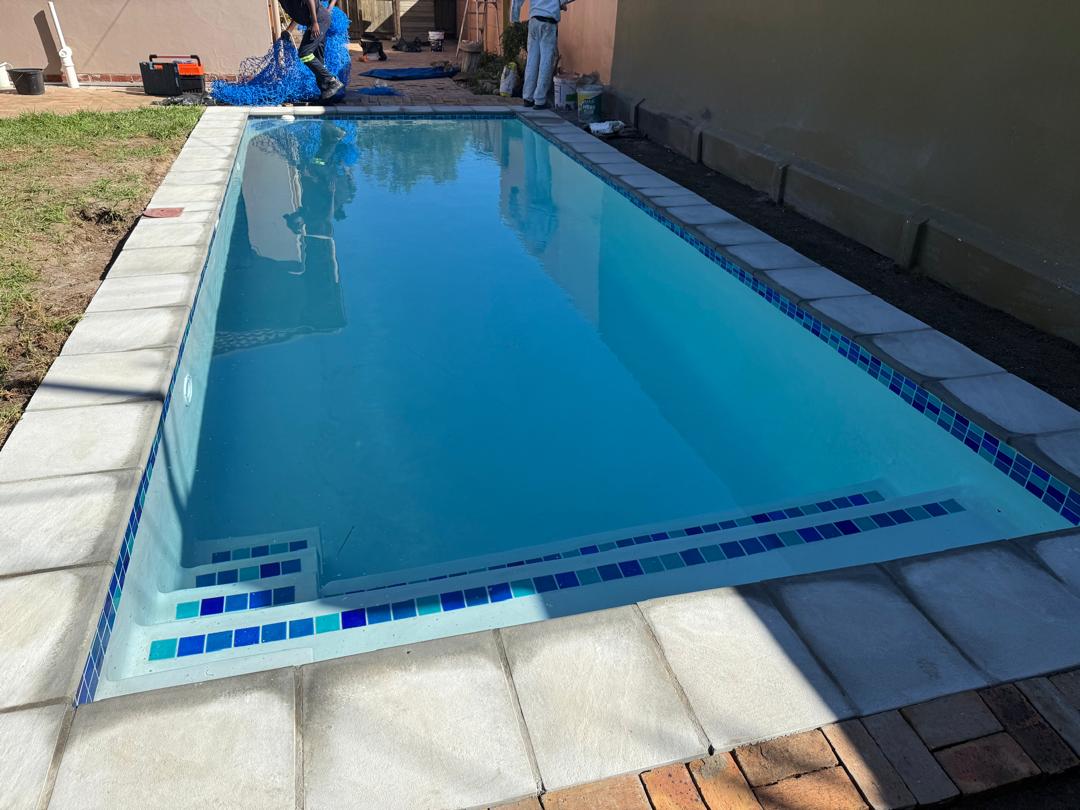
A swimming pool can be one of the most enjoyable additions to a home, guesthouse or lodge, but the price of building one depends on far more than its length and width. Two pools that look similar in photographs can have very different construction costs once the ground has been excavated, the plumbing installed and the surrounding area completed.
In Namibia, the location of the property also deserves attention. A pool being built on an accessible residential plot in Windhoek may involve different transport arrangements and site preparation from one being installed at a lodge outside a major town. The design, construction method, equipment and finishing choices all influence the final quotation.
At Premium Pools Namibia, we work with residential and hospitality properties on new swimming pool projects, including fibreglass and concrete or gunite pools. Understanding the main cost factors before construction begins makes it easier to establish a realistic budget, compare quotations and decide where your money will make the greatest difference.
Planning a New Swimming Pool?
Tell us where your property is located, what type of pool you have in mind and how you intend to use it. We can discuss your project requirements and the next steps towards a suitable quotation.
How Much Does It Cost to Install a Swimming Pool in Namibia?
As a starting point for budgeting, a swimming pool installation in Namibia may cost approximately N$150,000 to N$300,000 for a standard fibreglass pool, while a custom-built concrete pool may range from N$250,000 to N$500,000 or more. Larger pools, complex designs and installations requiring extensive excavation, premium finishes or additional features can cost considerably more.
There is no single installation price that applies to every swimming pool in Namibia. The cost of a small, straightforward pool can differ considerably from that of a large, customised design with integrated seating, extensive paving, heating and decorative water features.
The first thing to establish is what the quoted price actually covers.
A quotation might focus mainly on supplying and installing the pool structure, while another may include excavation, plumbing, filtration equipment, electrical work where applicable, coping and parts of the surrounding area. If these quotations are compared without examining their scope, the cheaper option may not represent the lower overall project cost.
For budgeting purposes, it helps to think about the installation as a complete project with several connected parts. These include preparing the site, building the pool, installing the systems that keep the water circulating and finishing the area around it.
Premium Pools Namibia provides swimming pool construction and installation services across Namibia, with the project scope established around the property, preferred design and work required.
Rather than relying on a price advertised for a pool of a particular size, request a quotation based on your actual property and requirements. That is the most useful way to understand what your proposed installation is likely to involve.
Fibreglass vs Concrete Pools: Which Costs More?
The construction method is one of the first decisions that can affect your swimming pool budget. Premium Pools Namibia works with both fibreglass and concrete or gunite construction, and each approach has different practical considerations.
Neither option is automatically the right choice for every property. The best fit depends on the design, the site, the finish you want and the level of customisation required.
Fibreglass swimming pools
A fibreglass pool uses a manufactured shell that is installed into a prepared excavation. The shape and dimensions are largely determined by the available shell design, so you generally choose from existing configurations rather than designing every part of the structure from scratch.
Installation still involves substantial site work. The excavation must accommodate the shell, the base must be prepared appropriately, and the pool must be positioned correctly. Plumbing, backfilling, equipment connections and surrounding finishes also need attention.
Fibreglass can be worth considering if an available shape and size suits your outdoor space and you prefer a defined design. However, the shell price alone does not establish the total installation cost.
Access is particularly relevant. The delivery vehicle and lifting equipment, where required, must be able to reach the installation area. A property with restricted access may need additional planning compared with a site where the shell can be delivered and positioned without major obstacles.
Concrete and gunite swimming pools
Concrete or gunite construction allows greater flexibility in the shape, dimensions and features of a swimming pool. This can be useful when the pool needs to fit an unusual space or follow the architecture of a house, lodge or entertainment area.
You can plan a more individual layout, including integrated steps, benches, shallow sections and other design details. The finish can also be selected to suit the intended appearance of the completed pool.
That flexibility comes with construction requirements that need to be considered in the quotation. The structural design, preparation, forming or application of the pool structure, plumbing, finishing and construction labour all contribute to the overall scope.
A customised pool with complicated geometry and several integrated features is likely to require more work than a simpler design of comparable water capacity. The extent of that difference depends on the actual project, so it is not possible to establish a reliable cost comparison from pool type alone.
Comparing the two options
| Consideration | Fibreglass | Concrete or gunite |
|---|---|---|
| Design flexibility | Limited to suitable manufactured shell designs | Greater freedom over shape and dimensions |
| Site preparation | Excavation and preparation for the selected shell | Excavation and preparation for the planned structure |
| Installation considerations | Shell delivery, positioning, plumbing and backfilling | Structural construction, plumbing and finishing |
| Custom features | Depend on the shell design and compatible additions | Can accommodate a wider range of integrated design features |
| Main cost considerations | Shell selection, transport, site access and installation work | Structural scope, design complexity, labour and finish |
The sensible approach is to compare complete project quotations rather than assume one construction type will always be cheaper. A fibreglass pool may suit a straightforward design, while concrete construction may make more sense when the property requires a particular shape or layout.
Pool Size and Depth Have a Direct Effect on the Budget
A larger swimming pool generally requires more materials, more excavation and a greater volume of water. Depth matters too, even when the pool’s length and width remain unchanged.
Consider a rectangular pool intended mainly for cooling off and family recreation. It may not need the same depth or internal layout as a pool designed for regular swimming or a hospitality property that expects a wider range of users.
Increasing the depth can affect the amount of excavation, the structural requirements and the volume of water the pool holds. A larger water volume can also influence the selection of pumps, filters and other circulation equipment.
The shape makes a difference as well. A simple rectangle is generally more straightforward to set out than a design with several curves, changes in depth or unusual corners. Integrated benches, steps and shallow lounging areas can add construction requirements depending on the chosen pool type.
Before finalising the design, consider how the pool will actually be used. A compact pool that fits the available space may provide more value than a much larger one that leaves insufficient room for movement, seating or other outdoor activities.
The aim is not to build the biggest pool your budget permits. It is to establish the dimensions and depth that meet your needs without introducing unnecessary construction costs.
Excavation and Ground Conditions Can Change the Price
The ground beneath the proposed pool is not always as straightforward as it appears from the surface.
Excavation costs depend partly on how much material must be removed and how easily the equipment can reach the site. Accessible ground that can be excavated using conventional equipment presents a different situation from a restricted area or ground that requires more demanding excavation methods.
Rocky ground can increase the work involved, particularly if specialised equipment is required. Unexpected underground obstructions may also affect the programme and cost. Existing services, pipes and other buried infrastructure need to be identified and considered before excavation proceeds.
Levels are another factor. A sloping property may require additional planning to establish the pool’s position relative to the house, paving and surrounding ground. Drainage and the management of water around the completed pool must also be considered.
These details are worth discussing before a final quotation is accepted. A site assessment can help identify visible constraints and establish whether further investigation is needed.
The location of the pool within the property matters just as much as the ground itself. A clear access route for excavation equipment and materials can simplify the work. If the intended position is behind an existing building or down a narrow side passage, moving equipment and removing excavated material may become more complicated.
A realistic budget should account for the actual site, rather than assume every property will require the same preparation.
Pool Installation Costs in Namibia
The town or region where a pool is being installed can affect project logistics. Premium Pools Namibia undertakes swimming pool construction projects across Namibia, including Windhoek, Swakopmund, Walvis Bay, Oshakati, Rundu, Katima Mulilo, Keetmanshoop and other areas, subject to the requirements of the individual project.
For properties outside major centres, transport and access deserve particular attention. Materials, equipment and other project requirements may need to be arranged over longer distances. A remote property may also require more detailed coordination to ensure that the different stages of construction can proceed efficiently.
This is relevant to lodges, guesthouses and hospitality properties in outlying destinations. The pool design may be only one part of the planning process when equipment, materials and construction activities need to be coordinated at a site away from established urban areas.
It would be misleading to apply one additional transport charge to every property outside Windhoek. The actual effect depends on the destination, the work involved, what needs to be transported and how the project is organised.
When requesting a quotation, provide the property’s location from the beginning. If it is a lodge or remote hospitality site, mention any access restrictions and relevant site details. This gives the project team a clearer basis for considering the work and logistics involved.
Namibia’s climate can also influence design decisions. Exposure to sun and wind may affect how the pool is used and managed, while evaporation is worth considering when planning the installation. These factors do not establish the construction price on their own, but they can influence which additions are worth including in the budget.
Planning a New Swimming Pool?
Tell us where your property is located, what type of pool you have in mind and how you intend to use it. We can discuss your project requirements and the next steps towards a suitable quotation.
What Is Included in a Swimming Pool Installation Quote?
A quotation should give you a clear understanding of the work being priced. It is worth checking the details before comparing totals, especially when two contractors appear to be offering similar pools.
The pool structure is only one component of a functioning installation. Excavation, plumbing, filtration, finishes and the surrounding area all need to be considered.
Excavation and site preparation
Check whether the quotation includes excavation, removal of excavated material and the preparation required for the chosen pool type. If the site presents unusual challenges, establish how additional work would be handled.
For a fibreglass pool, the preparation must accommodate the shell and its installation requirements. For concrete or gunite construction, the preparation needs to suit the planned structure.
Plumbing and circulation equipment
Water needs to move through the pool’s circulation system so it can be filtered and returned to the pool. Pipework, fittings, pump selection and filtration equipment therefore need to be appropriate for the pool’s dimensions and intended use.
Premium Pools Namibia provides pool pump, filter and equipment services, including the installation and replacement of relevant circulation equipment. For a new installation, it is useful to confirm which equipment is included in the construction quotation and whether any components are priced separately.
Do not assume that a pump and filter are included simply because a contractor has quoted for the pool itself. Ask for the equipment and associated installation work to be identified clearly.
Interior finishes, coping and paving
The interior finish affects the final appearance of the pool and the work required to complete it. The surrounding edge and outdoor area also contribute to the finished result.
Coping provides a finished edge around the pool, while paving or decking creates space for access, seating and other outdoor activities. The materials selected, the area to be covered and the preparation required beneath them can all affect the cost.
Premium Pools Namibia offers pool coping, paving and decking services. If these elements are important to your plans, establish whether they form part of the initial quotation or will be completed under a separate arrangement.
Electrical work and lighting
If your design includes underwater lighting, heating equipment or other powered features, the associated electrical requirements need to be considered. The scope may depend on the equipment selected, the existing electrical supply and the work required to install it safely.
Ask whether the relevant electrical work is included, arranged separately or excluded from the quotation. Electrical installation around a swimming pool should be handled by appropriately qualified professionals, with the necessary safety measures and compliance requirements addressed.
Filling, testing and commissioning
The project is not complete simply because the pool structure is in place. The circulation system needs to be checked, connections tested and the pool prepared for use.
Confirm what commissioning involves and whether the quotation covers the final checks, equipment operation and any initial instructions needed to manage the pool properly.
A quotation that sets out these components clearly is easier to evaluate than one that gives a single total without explaining the work covered.
Additional Features That Can Increase the Installation Cost
It is tempting to plan every desirable feature at the same time. However, not every pool needs heating, decorative water effects or an elaborate entertainment area.
The better approach is to distinguish between the essentials required for a functioning pool and additions that can be selected according to your budget.
Pool heating: A heating system can make the pool more comfortable during cooler periods. Premium Pools Namibia offers pool heating options, including heat-pump and solar systems. The appropriate system depends on the pool, the property and the intended use.
Pool covers: A suitable cover can help reduce evaporation, limit debris entering the water and retain heat, depending on the cover selected. In Namibia’s generally dry climate, evaporation may be a worthwhile consideration during the design stage.
Water features: Waterfalls, fountains and other decorative features can change the appearance and atmosphere of a pool. They may also introduce additional plumbing, circulation or equipment requirements, depending on the design.
Pool fencing and enclosures: These may form part of the wider safety plan for the property. The cost depends on the layout, materials, gates and installation requirements. Safety provisions should be planned from the outset rather than treated as an afterthought.
Lighting and integrated seating: Underwater lighting, built-in benches and specially designed steps can improve how the pool looks and functions, but they need to be incorporated into the design and construction scope.
Some additions are easier to accommodate during construction than after the pool has been completed. That does not mean every feature must be installed immediately. It means the initial design should take future plans into account where practical, so that later upgrades do not require avoidable alterations.
How to Budget for a Swimming Pool Without Overstretching Yourself
The most useful starting point is to decide what you want the pool to achieve. A family pool, an entertainment area and a pool serving a lodge can have very different priorities.
Once you have a clear purpose, establish a realistic budget for the complete installation rather than the pool structure alone.
A useful budgeting exercise is to separate the project into three groups.
| Budget category | What to consider |
|---|---|
| Essential construction | Pool structure, excavation, required plumbing, circulation equipment and the agreed installation work |
| Required finishing | Interior finish, coping, essential surrounding work and any necessary safety provisions |
| Optional additions | Heating, covers, decorative water features, upgraded lighting and additional landscaping |
The precise items in each category will depend on the property and project. For example, a particular safety measure may be essential for your site rather than an optional extra.
Once these categories are established, prioritise the features that are difficult or expensive to incorporate later. Structural requirements, plumbing routes and equipment arrangements should be resolved during the planning stage. Decorative additions can then be assessed against the remaining budget.
It is also sensible to allow for unforeseen work where the site has not yet been fully investigated. The appropriate allowance depends on the project’s complexity and the uncertainty surrounding the ground conditions. Your contractor can help identify where additional costs may arise and how they would be addressed.
Avoid committing your entire budget to the pool shell and then discovering that there is insufficient money for the equipment, finishing or surrounding work needed to complete the installation.
How to Compare Swimming Pool Construction Quotes
Obtaining more than one quotation can help you understand the available options, but the totals are only meaningful if the proposed work is comparable.
Suppose one quotation includes a fibreglass shell, excavation, filtration equipment and basic coping, while another includes a pool structure with a more extensive paved area and additional features. The second total may be higher because it covers more work, not necessarily because the installation is less competitive.
Before making a decision, check the proposed pool dimensions and depth, construction method, equipment specification, finishing materials and site preparation requirements. Confirm whether transport, excavation spoil removal, commissioning and the surrounding area are included.
You should also understand how changes are handled. If unexpected ground conditions require additional work, or you decide to add a feature during construction, ask how the cost will be assessed and approved.
A clear quotation should help you understand what you are paying for, what remains your responsibility and which items would result in additional charges.
Price matters, but so does the completeness of the proposed installation. A low initial figure is less useful if important components have been left out and must be arranged separately.
How Long Does Swimming Pool Installation Take?
Construction time is another practical consideration when planning your budget, particularly if you are coordinating landscaping, building work or preparations for guests.
The installation period depends on the pool type, site conditions, design complexity, material availability and the scope of finishing work. A fibreglass pool with straightforward access may follow a different programme from a customised concrete or gunite pool that requires more extensive construction.
Weather, transport arrangements and unexpected site conditions can also affect progress. Projects at remote properties may need additional coordination around the delivery of materials and equipment.
Rather than relying on a general promise that every pool can be installed within a fixed number of days, ask for an estimated programme based on your specific project. Clarify which stages are included, when the equipment will be installed and what needs to be completed before the pool can be commissioned.
If the pool forms part of a larger property development, coordinate the work with other contractors. Paving, drainage, landscaping and electrical work may need to follow a particular sequence to avoid delays or damage to completed surfaces.
A realistic programme is more useful than an overly optimistic deadline that does not account for the actual construction requirements.
Common Budgeting Mistakes to Avoid
A few decisions made early can prevent unnecessary expense later.
The first is choosing a pool based only on its appearance. A photograph may show the finished water, surrounding paving and landscaping, but it does not reveal the ground conditions, equipment specification or work required to achieve that result on your property.
Another mistake is overlooking access. Before choosing the final pool position, consider how excavation equipment, materials and, where applicable, a manufactured fibreglass shell will reach the installation area. A visually attractive position may create practical difficulties if access is restricted.
It is also easy to underestimate the surrounding work. Coping, paving, drainage, safety barriers and equipment access all influence how the finished pool functions. These elements should be considered alongside the pool itself.
Finally, avoid making late design changes without understanding their cost implications. Adding steps, changing the depth or relocating plumbing after construction has begun can introduce extra work. Finalising the main requirements before installation starts helps reduce the likelihood of avoidable alterations.
Getting a Swimming Pool Installation Quote From Premium Pools Namibia
Every pool project starts with a different set of requirements. A homeowner planning a compact fibreglass pool will need a different solution from a lodge requiring a larger, customised concrete pool for its guests.
At Premium Pools Namibia, we plan swimming pool construction around the property, intended use, preferred design and work required. Our construction services cover fibreglass and concrete or gunite pools, with related considerations such as equipment, finishes and the surrounding pool area included in the planning process where applicable.
To help establish the scope of your project, provide the location of the property, your preferred pool type, approximate dimensions if known and any features you would like to include. Photographs of the proposed installation area can also be useful when discussing the site, although they do not replace an assessment where one is needed.
We can then discuss the project requirements and the appropriate next steps towards a quotation.
Final Thoughts on Pool Installation Costs in Namibia
The cost of installing a swimming pool comes down to the combination of design, construction method, site conditions, equipment and finishing work. There is no single price that accurately represents every project, and the cheapest initial quotation does not always cover everything required to complete the pool.
Start by deciding how the pool will be used, which construction method suits the property and what your budget needs to cover. Give particular attention to excavation, access, circulation equipment and the surrounding area. These decisions establish the foundation for a more accurate quotation and help you avoid expensive surprises during construction.
A well-planned pool does not need every available feature. It needs the right design, suitable equipment and a construction plan that reflects the property and the people who will use it.
If you are considering a new swimming pool for your home, guesthouse, hotel or lodge, Premium Pools Namibia can help you explore the available construction options and establish the scope of your project.
Planning a New Swimming Pool?
Tell us where your property is located, what type of pool you have in mind and how you intend to use it. We can discuss your project requirements and the next steps towards a suitable quotation.


Comments are closed