


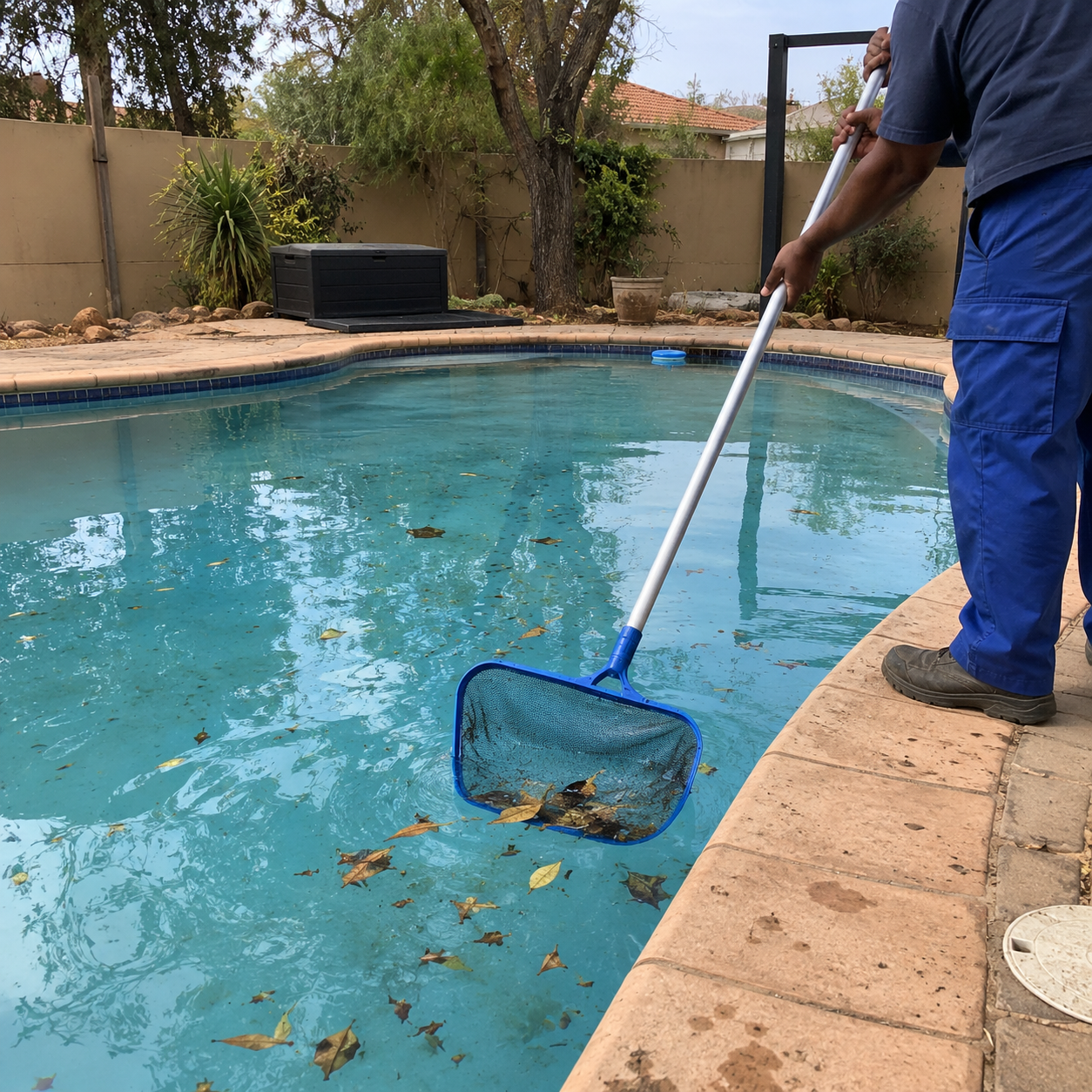
Keeping a swimming pool clean involves more than removing leaves and making the water look clear. Proper pool maintenance includes cleaning the interior surfaces, removing debris, maintaining water chemistry, checking filtration and ensuring that the circulation system is working as it should. These tasks help protect the pool’s finish and equipment while keeping the water suitable for swimming.
At Premium Pools Namibia, we understand that pool owners need to plan for both routine cleaning and the occasional intensive service. The cost depends on the size of the pool, how frequently it is used, the surrounding environment and the condition of the water. A pool that receives consistent maintenance generally requires less corrective work than one that has been neglected or has developed algae, filtration problems or heavy sediment build-up.
Understanding what affects pool cleaning costs makes it easier to choose an appropriate maintenance schedule, compare quotations and identify when a pool needs more than an ordinary clean.
Get Help With Your Pool Maintenance
Not sure whether your pool needs a routine clean or an intensive service? Tell us about its condition, size and any problems you have noticed.
How Much Does Swimming Pool Cleaning Cost in Windhoek?
Swimming pool cleaning costs vary according to the work required. A routine visit to a well-maintained pool involves different tasks from restoring a pool with green water, accumulated dirt or a malfunctioning filtration system.
The following estimates provide a starting point when budgeting for swimming pool cleaning and maintenance in Windhoek.
| Pool cleaning service | Estimated cost |
|---|---|
| Basic pool cleaning visit | N$400 to N$800 |
| Thorough cleaning with routine maintenance | N$600 to N$1,200 |
| Intensive cleaning for a dirty or neglected pool | N$1,000 to N$2,500 or more |
| Regular pool maintenance arranged monthly | N$1,500 to N$4,000 or more per month |
These are indicative budgeting ranges. The actual cost depends on the pool’s condition, the tasks included, chemical requirements, equipment needs and travel arrangements. A quotation should account for the specific work required rather than apply the same price to every pool.
A basic cleaning visit may involve skimming the water, brushing the pool walls, vacuuming the floor and emptying the baskets. A more comprehensive service may include water testing, chemical adjustments and checks of the pump and filtration system. An intensive clean can require additional labour, treatment products and further investigation if the pool has an underlying problem.
Monthly maintenance costs depend on the agreed frequency of visits and the scope of each service. A plan covering routine cleaning and water testing will differ from one that also includes chemicals, equipment servicing or additional visits when needed.
When comparing quotations, establish exactly what is included. A lower initial price may not represent better value if important cleaning tasks, chemical treatment or equipment checks are excluded.
What Determines Pool Cleaning Costs?
Two swimming pools of similar size can require different amounts of work. The time needed to clean a pool, the products required and the condition of its equipment all influence the overall cost.
Pool size and water volume
The size of a swimming pool affects the amount of surface area that must be brushed and vacuumed. Larger pools generally require more time to clean, and their greater water volume can influence the quantity of chemicals needed when water treatment is required.
Depth and design also matter. Pools with extensive steps, built-in seating, curved edges or other features may require additional attention during cleaning. Narrow corners and changes in depth can collect dirt that is not easily removed by surface skimming alone.
However, pool size should not be considered in isolation. A large pool that receives consistent maintenance may be easier to clean than a smaller pool with algae growth, heavy sediment or poor circulation.
The most useful estimate takes the pool’s dimensions and condition into account, along with the equipment and treatment required.
The condition of the water
The condition of the water can significantly affect the amount of work involved.
A pool with clear water and normal debris accumulation may only need routine cleaning and water testing. A pool with green water, persistent cloudiness or substantial algae growth may require more extensive treatment.
Cloudy water can result from several causes, including inadequate filtration, poor circulation, suspended particles and unbalanced water chemistry. Green water is often associated with algae growth, but the underlying conditions should still be assessed before treatment begins.
Simply adding chemicals without testing the water may waste products and fail to resolve the problem. The water should be tested, the circulation system checked and the appropriate treatment selected according to the findings.
The more severe the problem, the more likely the pool will require additional labour, chemicals or equipment checks beyond a standard cleaning visit.
How often the pool is cleaned
Regular cleaning helps prevent debris and contaminants from accumulating to the point where intensive treatment becomes necessary.
A pool used frequently may need more attention than one used occasionally. Swimming activity introduces contaminants, while leaves, insects and dust can enter the water even when nobody is swimming.
When maintenance is delayed, debris can settle on the pool floor, organic material can break down in the water, and algae may develop under favourable conditions. This can turn a straightforward cleaning visit into a more involved restoration process.
A consistent maintenance schedule helps make costs more predictable because the pool is less likely to reach a condition that requires extensive corrective work.
The right frequency depends on the pool’s use, exposure to debris, water quality and circulation performance. It should be adjusted when conditions change rather than followed rigidly regardless of the pool’s needs.
Chemicals and water treatment
Water treatment is an important part of swimming pool maintenance. A pool can look clean while still having unsuitable chemical levels, so visual appearance alone is not enough to determine whether the water is ready for swimming.
Maintenance may involve testing chlorine, pH and other relevant parameters, then making appropriate adjustments based on the results.
The amount of treatment required depends on the pool’s water volume, current readings, recent use and environmental conditions. Routine adjustments are different from treating an established algae problem or correcting a substantial chemical imbalance.
Pool owners should establish whether a cleaning quotation includes water testing, chemical adjustments and the chemicals themselves. Some services may include routine products, while others charge separately for treatment materials.
Accurate testing is more effective than adding chemicals by guesswork. Incorrect treatment can waste money, affect swimmer comfort and contribute to deterioration of some pool surfaces or equipment.
Pump and filtration equipment
The pump and filter work together to keep pool water circulating and remove suspended particles. If either component is not working correctly, the pool may remain cloudy or become dirty again shortly after cleaning.
Routine maintenance can include emptying skimmer and pump baskets, checking water flow and inspecting the filter according to the manufacturer’s instructions.
A dirty filter may need cleaning or backwashing, depending on the type of system installed. A damaged filter, failing pump or plumbing fault may require separate repair work.
If a pool repeatedly develops water quality problems despite regular cleaning, the circulation and filtration systems should be investigated. Increasing the frequency of cleaning will not necessarily solve an underlying equipment fault.
Pool surroundings and exposure to debris
The environment around a pool influences how quickly it becomes dirty. Trees, nearby gardens, exposed soil and wind can introduce leaves, pollen, insects and dust into the water.
Pools exposed to substantial debris may need more frequent skimming and vacuuming. Fine dust can also contribute to cloudy water, especially if the filtration system is not removing it effectively.
The surrounding deck and coping should be kept reasonably clean as well. Dirt and debris on the pool surround can be carried into the water by wind, rain or swimmers.
Taking these factors into account helps determine a realistic cleaning schedule and avoid paying for unnecessary intensive cleaning.
Travel and access requirements
The location of a property and the practical arrangements needed to reach the pool can affect the total service cost. Restricted access, additional equipment requirements and travel arrangements may influence the time and resources required.
When requesting a quotation in Windhoek, provide the property’s location, approximate pool dimensions and a description of its current condition. Photographs can help communicate visible issues, although an inspection may be needed to establish the full scope of work.
Request a Pool Cleaning Quotation
Need help keeping your swimming pool clean and properly maintained? Tell us about your pool and the service you require.
What Does a Professional Pool Cleaning Service Include?
The term pool cleaning can describe several different levels of service. Understanding the tasks involved helps you assess what your pool needs and what should be included in a quotation.
Removing leaves and floating debris
Leaves, insects, dust and other debris can collect on the water’s surface. Skimming removes this material before it sinks and becomes more difficult to collect.
Skimmer baskets should also be checked and emptied when necessary. Baskets filled with debris can restrict water flow and affect circulation, making regular checks an important part of pool maintenance.
The amount of debris entering a pool depends on its surroundings and exposure to wind. Some pools therefore need surface cleaning more frequently than others.
Brushing the walls and floor
Brushing loosens dirt, algae and deposits that cling to the pool’s interior surfaces. Particular attention should be given to corners, steps, waterlines and other areas where debris tends to accumulate.
The brush must be suitable for the pool’s finish. A brush that is too abrasive can damage some surfaces, while insufficient brushing may leave deposits behind.
Persistent staining, rough patches or peeling finishes may indicate a problem that cannot be resolved through routine brushing alone. In these cases, the surface should be assessed before stronger cleaning methods are attempted.
Vacuuming the pool
Vacuuming removes dirt and sediment that settle on the pool floor. Depending on the pool’s design and available equipment, cleaning may be carried out using a manual vacuum or a suitable automatic cleaner.
The amount of debris present affects the time required. A pool that has accumulated substantial sediment may need more extensive cleaning than one that receives regular attention.
The method used to remove debris also matters. Some systems send the material through the filter, while others allow it to be removed separately. The appropriate method depends on the pool equipment, the condition of the water and the manufacturer’s instructions.
Cleaning the filtration system
The filter should be maintained according to its type and the manufacturer’s instructions. Sand filters, cartridge filters and other systems have different cleaning procedures and maintenance requirements.
For example, a sand filter may require backwashing when indicated by the system’s pressure readings or the manufacturer’s guidance. A cartridge filter may need cleaning or replacement when it becomes obstructed or worn.
Filter maintenance should not be confused with repairing a damaged filter or replacing failed components. If the equipment is not functioning properly, additional servicing may be required.
Testing and balancing the water
A comprehensive cleaning service may include testing the water and making appropriate chemical adjustments.
Treatment should be based on actual test results and the requirements of the pool. Adding more chemicals simply because the water looks cloudy can create further imbalances if the underlying cause is poor filtration, inadequate circulation or another problem.
Water testing should also be repeated as needed after treatment to determine whether the desired conditions have been restored. The correct process depends on the pool’s condition and the products used.
Inspecting visible equipment problems
A routine cleaning visit can also reveal issues that need further attention. These may include unusual pump noises, weak return-jet flow, damaged baskets, leaking fittings or recurring filter problems.
Identifying these warning signs early can help pool owners arrange the appropriate repair before the fault causes further disruption.
However, routine cleaning does not automatically include repairing or replacing faulty equipment. If a problem is identified, the work required should be explained and quoted separately where necessary.
Routine Cleaning Versus Intensive Pool Cleaning
Routine cleaning is designed to keep a pool in good condition. Intensive cleaning is needed when ordinary maintenance is no longer sufficient.
Routine cleaning generally involves removing floating debris, brushing and vacuuming surfaces, emptying baskets, checking the filtration system and carrying out agreed water tests. It is most suitable when the pool is already being maintained consistently.
Intensive cleaning may be required when the pool has green water, heavy sediment, extensive algae growth or a significant build-up of dirt. The work may involve additional treatment, more time spent removing debris and closer inspection of the circulation and filtration system.
The cost of routine cleaning is usually easier to estimate because the tasks are more predictable. Intensive cleaning depends heavily on the pool’s condition, the severity of the problem and the treatment required.
An intensive clean does not automatically resolve every underlying problem. If the pump is faulty, the filter is damaged or water chemistry remains unsuitable, the pool may become dirty again unless the cause is addressed.
The objective is to restore the pool to a manageable condition and establish a maintenance routine that helps keep it that way.
How Windhoek’s Climate Can Affect Pool Cleaning
Environmental conditions influence how quickly an outdoor swimming pool collects debris and how frequently it needs attention. In Windhoek, heat, wind, dust and sunlight are important considerations when planning pool maintenance.
Dust and airborne debris
Wind can carry dust and fine particles into an outdoor pool. These materials may settle on the water’s surface or accumulate on the floor, increasing the need for skimming and vacuuming.
Fine particles can also contribute to cloudy water when the filtration system is not removing them effectively. If cloudiness persists despite cleaning, the filter and circulation system should be checked.
Keeping the surrounding pool area clean can help reduce the amount of material entering the water. Where exposure to debris is high, a suitable pool cover may also help reduce the amount of dirt entering the pool when it is not in use.
Heat and evaporation
Hot weather can increase evaporation, causing the water level to fall even when there is no leak. Wind can increase water loss further.
Pool owners should distinguish ordinary evaporation from unusual water loss before assuming that a leak is present. Frequent topping up can also affect water chemistry, making testing and adjustment important.
If the water level continues to drop unexpectedly, the cause should be investigated rather than assuming evaporation explains the entire loss.
Sunlight and water treatment
Strong sunlight can affect chlorine levels, while warm water and other conditions can influence algae growth. The rate at which treatment is needed depends on the pool’s exposure, water chemistry, use and circulation.
Regular testing is more reliable than adding chemicals based solely on appearance. Clear water does not, by itself, confirm that the water chemistry is suitable for swimming.
Changes in pool usage
Some pools are used more frequently during warmer periods and less often during cooler months. Changes in use can affect debris levels, water treatment requirements and the maintenance schedule.
A pool that is used less frequently still requires appropriate water treatment and equipment care. Leaving it unattended can allow water quality to deteriorate and faults to go unnoticed.
The maintenance plan should reflect how the pool is used throughout the year rather than assuming that less swimming means no maintenance is needed.
Is It Cheaper to Clean Your Pool Yourself?
Cleaning your own pool can reduce the cost of professional cleaning visits, particularly when the pool is already in good condition and you are comfortable carrying out routine maintenance.
However, DIY maintenance still involves expenses. Pool owners may need a skimmer net, suitable brushes, a vacuum system, water-testing supplies and appropriate chemicals. Equipment also requires maintenance and occasional replacement.
You will need to understand how to test and balance the water, maintain the filter and recognise signs of equipment failure. Incorrect chemical handling or unsuitable cleaning methods can damage pool surfaces and equipment.
Professional cleaning may be more practical when the pool has become heavily contaminated, when the circulation system is not working properly or when you do not have the time or experience to maintain it consistently.
Some pool owners choose a combination of DIY care and professional servicing. They may remove leaves and monitor water quality between visits while arranging professional help for more involved cleaning and equipment checks.
The best approach depends on your available time, the equipment you own and the level of maintenance your pool requires. Whichever approach you choose, regular attention is usually more manageable than allowing problems to accumulate.
How to Keep Pool Cleaning Costs Under Control
Consistent maintenance can help prevent avoidable problems and reduce the likelihood of needing expensive intensive cleaning. The aim is to keep the pool in a condition that is manageable without overlooking developing faults.
-
Remove debris regularly. Skim leaves and other floating material before it sinks. Empty baskets when necessary to help maintain water flow.
-
Monitor water chemistry. Test the water at suitable intervals and make adjustments based on the results.
-
Maintain the pump and filter. Follow the equipment manufacturer’s instructions and investigate unusual noises, weak circulation or recurring cloudiness.
-
Address problems early. Persistent algae, unexplained water loss and repeated equipment faults should be investigated rather than treated repeatedly without identifying the cause.
-
Use a suitable maintenance schedule. Adjust cleaning frequency to the pool’s size, usage, surroundings and rate of debris accumulation.
-
Keep the surrounding area tidy. Remove leaves and loose dirt from the deck and nearby surfaces so that less debris enters the water.
-
Monitor the water level. Take note of unusual changes and investigate persistent water loss.
-
Keep basic maintenance records. Recording cleaning visits, water test results, chemical adjustments and equipment issues can help identify recurring problems.
It is also worth discussing the scope of a recurring cleaning arrangement before committing to it. Confirm how often visits will take place, which tasks are included, whether chemicals are charged separately and how additional work is handled.
These details make it easier to plan a realistic budget and reduce misunderstandings about what the service covers.
Questions to Ask Before Booking a Pool Cleaning Service
Before arranging pool cleaning, establish exactly what the service includes and whether additional charges may apply.
Ask whether the visit includes skimming, brushing, vacuuming, basket cleaning, filter maintenance and water testing. If chemical treatment is required, confirm whether the products are included in the price or billed separately.
You should also clarify whether the service covers routine cleaning only or whether equipment problems can be assessed and reported for further work.
For recurring maintenance, discuss the proposed visit frequency and how the schedule can be adjusted if the pool becomes dirtier than usual. A pool exposed to substantial dust or used heavily may require a different arrangement from one that remains relatively clean between visits.
Finally, explain any existing problems before the visit. Green water, suspected leaks, damaged surfaces and malfunctioning pumps can all affect the work required. Identifying these concerns early helps establish a more appropriate scope of service.
A clear quotation should set out the agreed work, any exclusions and how additional treatment or repairs will be handled. This gives you a better understanding of what you are paying for and makes it easier to compare service providers on a like-for-like basis.
When Pool Cleaning Is No Longer Enough
Regular cleaning can keep a swimming pool in good condition, but some problems require more than removing debris and balancing the water. Recognising when a pool needs repairs, specialised treatment or renovation can help prevent recurring problems and unnecessary maintenance costs.
Persistent cloudy water
If the water remains cloudy despite regular cleaning, the cause may be inadequate filtration, poor circulation or an imbalance in the water chemistry. The filter may need attention, or the circulation system may not be moving water effectively through the pool.
Repeatedly adding chemicals without identifying the underlying problem can increase maintenance costs without resolving the issue. Water testing and an assessment of the filtration system can help determine the appropriate next step.
Algae that keeps returning
Recurring algae growth may indicate that the pool’s water treatment, circulation or filtration needs attention. Although treatment can remove visible algae, the problem may return if the conditions that allowed it to develop remain unchanged.
The pool should be assessed to determine whether the issue relates to water chemistry, inadequate circulation, filtration performance or another maintenance concern.
Unusual water loss
A falling water level can result from evaporation, splashing or a leak. However, if the pool continues to lose water unexpectedly, the cause should be investigated.
Persistent water loss may require leak detection rather than repeated topping up. Identifying the source can help prevent further water wastage and potential damage to surrounding areas or pool components.
Damaged surfaces and deteriorating finishes
Rough surfaces, peeling finishes, cracks and damaged grout are not ordinary cleaning problems. Aggressive brushing or using unsuitable cleaning products may make some surface issues worse.
Where deterioration is visible, the pool may need a professional assessment to determine whether repairs, resurfacing or renovation are appropriate.
Problems with the pump or filtration system
Unusual pump noises, weak water flow, repeated filter blockages and equipment that frequently stops working can affect the pool’s overall condition. These problems may prevent effective circulation and make it difficult to maintain clean water.
Rather than increasing the frequency of cleaning visits, investigate the equipment and arrange repairs where necessary.
The key consideration is whether the problem can be resolved through routine maintenance or whether it requires a separate service. Identifying that difference helps pool owners make better decisions about their budgets and avoid paying repeatedly for cleaning that cannot address the underlying cause.
Request a Pool Cleaning Quotation
Need help keeping your swimming pool clean and properly maintained? Tell us about your pool and the service you require.


Comments are closed