


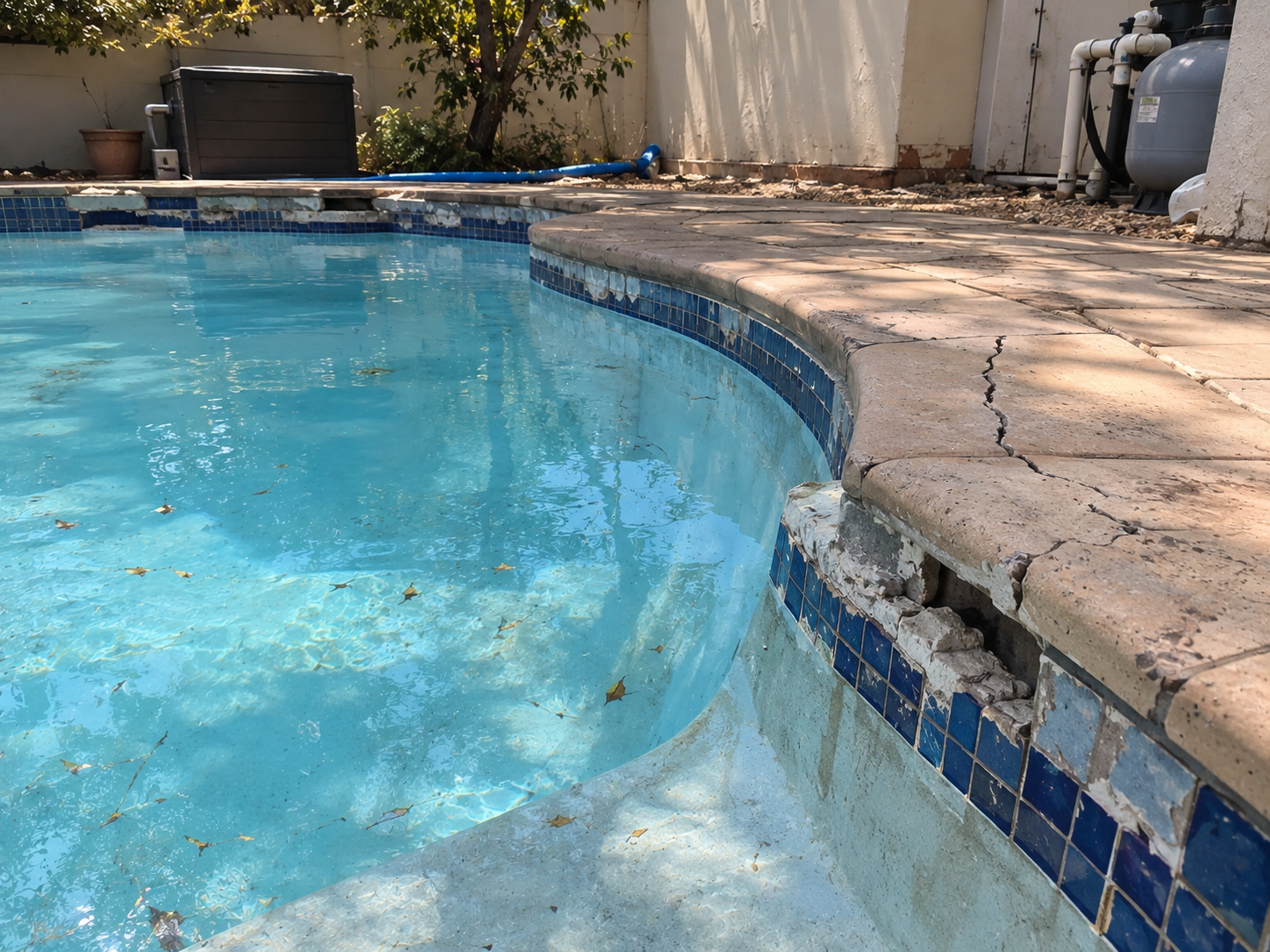
A swimming pool should provide a place to relax, exercise and enjoy time with family. However, keeping it in good condition involves more than removing leaves, cleaning the water and adding chemicals. Over time, pool surfaces can deteriorate, pumps can develop faults, plumbing can begin to leak, and structural problems may appear around the pool shell or surrounding paving.
The difficulty is that many swimming pool problems do not start with obvious damage. A small crack might appear harmless, a pump may continue running despite a developing fault, or the water level might drop without any visible sign of a leak. These changes are easy to overlook, particularly when the pool still looks usable.
For pool owners across Namibia, recognising these warning signs is an important part of protecting a swimming pool and avoiding unnecessary repair expenses. High temperatures, strong sunlight, wind, dust and evaporation all influence pool maintenance requirements. Although these conditions do not automatically cause damage, they make it especially important to understand what is normal for your pool and when a change deserves further investigation.
At Premium Pools Namibia, we know that every swimming pool has different maintenance and repair needs. Some problems can be resolved through routine servicing, while others require specialised attention to the pool structure, plumbing, filtration system or finish.
Understanding the difference helps you make informed decisions about maintaining your pool, planning repairs and preventing minor faults from developing into more extensive problems.
Discuss Your Pool's Repair and Maintenance Needs
From damaged finishes to weak water circulation, different pool problems require different solutions. Share the symptoms you have noticed so we can discuss the type of attention your pool may need.
Why It Is Important to Recognise Pool Problems Early
Swimming pool repairs can range from relatively simple tasks, such as replacing a damaged fitting, to more involved work involving pipework, surface restoration or structural repairs. The type of work required depends on the underlying cause, the location of the damage and how far the problem has progressed.
When a problem is identified early, it may be possible to address the affected component before other parts of the pool are compromised. For example, a damaged seal around a fitting may be easier to deal with than a leak that has continued for months and affected the surrounding area.
The same principle applies to pool equipment. A pump that begins making unusual noises may have a developing mechanical problem. Continuing to operate it without investigating the cause could place additional strain on the motor or other components.
Delaying repairs can also affect the usability of the pool. Poor circulation may contribute to recurring water quality problems, while loose tiles, damaged steps and rough surfaces can create hazards for swimmers.
Not every unusual change means that something is seriously wrong. Water loss may simply be evaporation, cloudy water may result from incorrect chemical balance, and a dirty filter may explain reduced water flow. The important step is to identify the cause instead of assuming that every problem requires the same solution.
1. Cracks Are Appearing in the Pool Walls, Floor or Surrounding Structure
Cracks are among the most noticeable warning signs that a swimming pool may need repairs. They can appear in the pool shell, plaster or other interior finishes, coping, tiles and the paving around the pool.
However, the location and characteristics of a crack matter. A small crack in a surface coating does not necessarily indicate structural damage, whereas a crack through the pool shell may require a more detailed investigation.
Start by identifying exactly where the crack appears and whether it seems to be changing. Take photographs and compare them over time. If the crack becomes wider, extends into nearby surfaces or appears alongside unexplained water loss, arrange an assessment rather than simply covering it.
Cracks in the pool shell
Cracks in the walls or floor may affect the pool’s ability to retain water, depending on their depth and cause. Some may be limited to the surface finish, while others may extend into the underlying structure.
Potential contributing factors include movement in the ground, construction defects, deterioration of materials and stress affecting the pool structure. The correct explanation cannot be determined from appearance alone.
A specialist may need to establish whether the damage is superficial or structural before recommending a repair. This distinction is important because a treatment suitable for a surface crack may not be appropriate for a crack that extends through the pool shell.
Cracks around the pool edge
The coping and paving around a swimming pool should also be inspected. Cracks, uneven sections or separation between the coping and surrounding surfaces can indicate deterioration, movement or problems with the supporting materials.
These issues may begin as minor cosmetic defects, but they can worsen if water enters gaps or the underlying ground continues to move. Uneven paving can also create trip hazards.
When should a crack be investigated?
A crack deserves particular attention when it is growing, appears in several connected areas, is accompanied by sinking or uneven surfaces, or occurs alongside unusual water loss.
Avoid filling cracks with ordinary household sealants or applying a new surface coating before understanding the cause. A lasting repair depends on identifying the type of damage and selecting a suitable method for the pool’s construction.
2. Your Pool Is Losing More Water Than Usual
Water loss is one of the most common reasons pool owners become concerned about possible repairs. In Namibia, however, a falling water level does not automatically mean that the pool is leaking.
Hot weather, low humidity, wind and direct sunlight can increase evaporation. Water can also be lost through splashing, filter backwashing and other normal activities.
The concern arises when the amount of water lost seems unusual for the prevailing conditions, particularly when the pool continues to lose water even when it is not being used frequently.
Understanding normal evaporation and possible leaks
Evaporation occurs naturally as water moves from the pool into the surrounding air. Its rate changes with temperature, humidity, wind exposure, sunlight and other environmental conditions.
A leak is different because water escapes through a defect in the pool structure, plumbing or equipment. Depending on the location, a leak may not produce an obvious puddle or visible stream of water.
Possible sources include damaged pipework, leaking valves, faulty seals, underwater fittings, skimmers and cracks in the pool shell.
Signs that water loss may need investigation
Look out for a combination of symptoms rather than relying on the water level alone. These may include:
-
The pool requires frequent refilling beyond what you would normally expect in similar weather.
-
Damp patches appear around the pool or equipment area without an obvious explanation.
-
Soil or paving becomes wet or begins to sink in a particular area.
-
Water loss continues when the pool is not being used.
-
The pump or filtration system shows other signs of malfunction.
-
Cracks or damaged fittings appear alongside the falling water level.
None of these signs proves that a leak is present, but they can help identify when further investigation is appropriate.
A simple preliminary check is to compare the pool’s water loss with evaporation using a container of water placed nearby under similar conditions. Mark the water levels and compare their changes over a consistent period. This can help indicate whether the pool is losing more water than expected, but it cannot locate or conclusively confirm a leak.
If the water loss remains unexplained, professional leak detection may be necessary. Identifying the source before carrying out repairs helps avoid spending money on the wrong solution.
3. Your Pool Water Remains Cloudy Despite Regular Cleaning
Cloudy water is often associated with poor maintenance, but persistent cloudiness can also point to a problem with filtration, circulation or water chemistry.
If you clean the pool regularly, remove debris and maintain the water treatment routine but the water still looks dull or milky, it is worth investigating further. Simply adding more chemicals without identifying the cause may not resolve the problem.
Poor filtration
The filtration system removes particles and contaminants from the water. When the filter is dirty, damaged, incorrectly operated or unsuitable for the system, it may not remove suspended particles effectively.
A filter that requires cleaning may only need routine maintenance. However, persistent problems after proper cleaning may indicate that the filter media, internal components or filtration equipment need attention.
Inadequate circulation
Pool water needs to circulate through the filtration system so that contaminants can be removed and treated water can return to the pool.
If the pump is not operating properly, the filter is restricted or the plumbing is obstructed, circulation may become inadequate. Some areas may receive less effective circulation, allowing debris and contaminants to accumulate.
Incorrect water chemistry
Water chemistry must also be considered. Incorrect pH or insufficient sanitiser can interfere with effective water treatment, while other imbalances can contribute to cloudiness or deposits.
Testing the water helps establish whether treatment is needed. If the chemistry is corrected but cloudiness persists, investigate filtration and circulation rather than repeatedly applying additional products.
When cloudiness may indicate a repair problem
Cloudy water alone does not establish that equipment is damaged. The warning sign is when it repeatedly returns or remains unresolved despite appropriate cleaning, water testing and treatment.
A professional assessment can help determine whether the problem is related to routine maintenance, the filtration system, the pump or another component.
Until the water is sufficiently clear and its treatment levels are confirmed to be suitable, avoid swimming if visibility is poor. A pool floor or submerged swimmer that cannot be seen clearly presents a safety concern.
4. Algae Keeps Returning After Treatment
Algae growth can turn clear pool water green, create slippery surfaces and leave discoloured patches on walls, steps and the floor. It is a common maintenance challenge in warm, sunny environments.
Namibia’s climate can create conditions favourable to algae, particularly when water treatment is inadequate or circulation is poor. Nevertheless, recurring algae should not always be treated as a cleaning problem alone.
An isolated outbreak may be resolved through appropriate brushing, cleaning, water balancing and treatment. If the algae repeatedly returns shortly after treatment, however, the underlying conditions may still be present.
What causes recurring algae?
Several factors can contribute:
Insufficient sanitiser: If sanitiser levels are not maintained appropriately, algae may grow despite regular cleaning.
Poor water circulation: Areas with inadequate circulation can be more difficult to keep clean and properly treated.
Filtration problems: A filter that is not functioning effectively can make it harder to remove suspended material and restore water clarity.
Difficult-to-clean surfaces: Rough or deteriorating finishes may allow deposits to accumulate and make thorough brushing more difficult.
Inconsistent maintenance: Irregular cleaning and water testing can allow conditions favourable to algae to develop.
When should you suspect an underlying fault?
If algae keeps appearing in the same area, the pool takes an unusually long time to recover after treatment, or the water repeatedly becomes green despite suitable maintenance, investigate the circulation and filtration system.
The pool surface should also be inspected for deterioration that makes cleaning difficult. However, it is important not to assume that damaged surfaces are necessarily the cause of algae.
Repeatedly treating the water without identifying the underlying issue can increase maintenance demands without delivering lasting results. The objective should be to restore water quality and correct any contributing equipment or surface problems.
5. Your Pool Pump Is Making Unusual Noises
The pool pump is responsible for moving water through the circulation and filtration system. When it begins to malfunction, the consequences may extend beyond the equipment itself.
A pump problem can reduce water flow, interfere with filtration and make it harder to maintain suitable water quality. Changes in the sound or operation of the pump may provide an early warning that something needs attention.
Grinding, rattling or humming
A grinding sound may indicate worn mechanical components, while rattling can result from loose parts or vibration. A motor that hums without starting normally may have an electrical or mechanical fault.
These sounds are not enough to identify the exact cause. The pump may also be affected by air entering the system, restrictions in the water supply or other operating conditions.
Repeated stopping and starting
If the pump repeatedly switches off or stops unexpectedly, it may be overheating, experiencing an electrical fault or struggling because of another problem.
Do not assume that the motor needs replacement immediately. The cause should be identified first, as replacing the pump without investigating related components may not solve the underlying issue.
Leaks around the pump
Water around the pump or filter may indicate a leaking connection, damaged seal, loose fitting or another problem with the equipment or plumbing.
Check whether the area becomes wet only during certain operating conditions and whether there are visible signs of leakage. Avoid dismantling pressurised equipment or opening electrical components yourself.
What should you do?
If the pump is making unusual noises, overheating, repeatedly stopping or showing signs of damage, switch it off if it is safe to do so and arrange an inspection.
Continuing to operate a malfunctioning pump can cause further damage, particularly if it is not receiving adequate water. A qualified professional can assess the pump, connections, valves and related equipment before recommending a repair or replacement.
6. Water Flow From the Return Outlets Has Become Weak
A swimming pool may still look relatively clean even when the circulation system is not working as effectively as it should. One sign of a possible problem is a noticeable reduction in water returning to the pool through the circulation outlets.
Weak return flow can have several causes, and not all of them require major repairs.
A pump basket filled with leaves, a dirty filter, a low pool water level or a restricted pipe can all affect circulation. Air entering the suction side of the system may also interfere with pump performance.
The first step is to check the simple possibilities. Make sure the water level is appropriate for the pool’s skimmer arrangement and inspect accessible baskets and filters according to the manufacturer’s instructions.
If the flow remains weak after routine checks, the problem may involve the pump, valves, plumbing or another component of the circulation system.
Why weak circulation matters
Poor circulation affects more than the movement of water. It can reduce filtration effectiveness, interfere with the distribution of treated water and contribute to recurring water quality problems.
A pool with persistent circulation issues may require more frequent cleaning and treatment, yet continue to develop cloudy water or algae.
Running the pump for longer periods is not necessarily the solution. If a mechanical fault or obstruction is restricting the system, operating it for longer may not restore normal performance.
Have the system assessed if water flow remains weak, the pump struggles to maintain its normal operation or other warning signs appear. Identifying the cause helps prevent unnecessary equipment replacement and recurring maintenance problems.
Request a Swimming Pool Repair Assessment
Noticed cracks, leaks, damaged finishes or equipment problems? Tell us about your pool and the issues you have observed.
7. Pool Tiles Are Cracked, Loose or Falling Off
Tiles contribute to the appearance and finish of a swimming pool, but they also form part of the pool’s surface system. When tiles become loose, crack or fall away, the damage should be assessed rather than treated as a purely cosmetic problem.
A small area of damaged tiling may be relatively straightforward to repair. Widespread deterioration, recurring tile failures or damage accompanied by cracks can indicate a more extensive issue.
Why do pool tiles become loose?
Possible causes include deteriorating adhesive, movement in the underlying surface, moisture entering behind the tiles, unsuitable installation materials or general ageing.
The waterline is worth inspecting because it is exposed to changing wet and dry conditions, deposits and regular cleaning. Steps, corners and built-in features should also be checked.
Why replacing the tiles may not be enough
If tiles have detached because the underlying surface is moving or the bonding material has deteriorated, simply installing replacement tiles may provide only a temporary solution.
The affected area should be examined to establish whether the substrate is sound and whether the original cause needs to be addressed. The replacement materials and installation method should be suitable for a swimming pool environment.
Damaged tiles can also create sharp edges or loose pieces that may injure swimmers. If the damage presents a safety risk, keep people away from the affected area until it has been made safe.
8. The Pool Finish Is Peeling, Flaking or Becoming Rough
The pool’s interior finish plays an important role in its appearance, comfort and ease of maintenance. Depending on the type of surface, deterioration may appear as peeling paint, flaking material, rough patches, blisters, discolouration or areas where the finish separates from the underlying structure.
These signs should not automatically be attributed to the age of the pool. The cause may relate to the original installation, surface preparation, water chemistry, moisture, unsuitable materials or normal deterioration over time.
Peeling or bubbling paint
Painted pool finishes can peel or blister when adhesion is compromised. This may occur because of poor surface preparation, incompatible coatings, moisture-related problems or the condition of the existing finish.
Applying another coat without preparing the surface properly is unlikely to provide a durable result. The existing coating and underlying surface should be assessed before repainting.
Rough or deteriorating surfaces
A rough pool surface may result from deterioration of the finish or changes associated with water chemistry and ageing. Rough areas can be uncomfortable for swimmers and may make cleaning more difficult.
In some cases, localised repair is possible. More extensive deterioration may require resurfacing or renovation, depending on the material and the condition of the pool shell.
Discolouration and surface deposits
Discolouration may be caused by deposits, staining, chemical imbalance or deterioration of the finish. It is important to identify the cause before choosing a cleaning product or repair method.
Using unsuitable chemicals or aggressive cleaning techniques can worsen some surface problems. If stains persist or the finish is visibly deteriorating, professional assessment can help determine whether cleaning, treatment or repair is appropriate.
9. Wet Patches, Sinking Paving or Erosion Are Appearing Around the Pool
The area surrounding a swimming pool can reveal warning signs that are not visible from inside the water.
Persistent wet patches, damp soil, sinking paving, separated coping or erosion may indicate a drainage problem or water escaping from the pool or its pipework.
However, these symptoms can have other causes. Irrigation systems, rainwater, splash-out and poor drainage may create similar conditions. The important consideration is whether the problem persists without an obvious explanation.
Watch for changes in the surrounding ground
If paving begins to sink or separate, inspect the affected area for cracks, uneven surfaces and signs of moisture. Ground movement and inadequate support can affect the pool surroundings and may place stress on nearby pipework or structural components.
A visible defect in the paving does not automatically mean the pool shell is damaged. The underlying cause should be established before deciding what repair work is required.
Do not ignore recurring damp areas
If an area remains wet during dry weather, particularly when the pool is losing water, a leak or plumbing problem may need investigation.
Repairing the paving alone will not resolve a leak if water continues escaping underneath it. Similarly, sealing an exposed pipe connection may not solve a problem caused by a damaged section of underground pipework.
Where several symptoms appear together, such as falling water levels, damp ground and new cracks, a more thorough assessment is advisable.
10. Pool Lights, Skimmers or Other Fittings Are Damaged
Swimming pools contain several fittings that contribute to circulation, access, lighting and everyday operation. These components can deteriorate with age, exposure and regular use.
Inspect visible fittings periodically, paying attention to loose components, cracked housings, damaged seals, corrosion and deterioration around the points where fittings meet the pool surface.
Skimmers and return fittings
Skimmers collect floating debris from the water’s surface, while return outlets direct filtered water back into the pool. Damage to these components can affect circulation or allow water to escape through compromised connections.
If a skimmer becomes damaged or water appears to be leaking around a fitting, the affected area may need repair. The correct solution depends on the condition of the fitting, its housing and the surrounding pool structure.
Ladders, handrails and steps
Loose ladders and handrails can create safety hazards, especially for children, older swimmers and anyone who relies on them for support when entering or leaving the water.
Check that these components are secure and that their attachment points show no signs of damage. If a fitting moves unexpectedly or its mounting area is cracked, stop using it until it has been assessed and repaired.
Underwater lighting
Pool lighting requires particular care because electrical components operate in a wet environment. Flickering lights, repeated electrical trips or signs of water entering a light fitting should never be ignored.
Do not remove underwater lights or attempt electrical repairs yourself. Have the installation inspected by a suitably qualified professional who can assess the electrical fault and determine whether the fitting, wiring or associated components need attention.
Addressing damaged fittings early can improve safety and help prevent small defects from becoming more extensive problems.
11. Your Pool Keeps Developing the Same Problem
A recurring problem can be more revealing than a single incident. If your pool repeatedly develops cloudy water, loses water, struggles with circulation or grows algae shortly after cleaning, the original cause may not have been resolved.
This does not automatically mean that the pool needs major repairs. However, it does suggest that the maintenance approach should be reviewed and that equipment or structural problems may need to be ruled out.
Repeated cloudy water
If the water becomes cloudy again soon after cleaning, check whether the filter is functioning correctly, the pump is circulating water effectively and the chemistry remains suitable.
Simply repeating the same cleaning process may not provide lasting improvement if filtration or circulation is inadequate.
Algae that returns quickly
Recurring algae may indicate inconsistent sanitiser levels, poor circulation or other water treatment problems. If the issue persists despite appropriate treatment, assess the filtration system and inspect surfaces that are difficult to clean.
Water loss that continues after refilling
If the water level repeatedly drops beyond expected evaporation and normal use, investigate whether the pool, plumbing or fittings are leaking.
Repeated refilling without identifying the cause can waste water and increase the time and expense involved in maintaining the pool.
Equipment faults that keep returning
A pump that repeatedly loses its prime, overheats or develops the same operating fault may need a more detailed assessment. Replacing individual parts without identifying the underlying problem may not prevent another failure.
Keep a record of when each problem occurs, what treatment or repair was attempted and how long the improvement lasted. This information can help a professional distinguish between recurring maintenance issues and faults that require a different repair approach.
12. Your Pool Is Taking Longer to Clean and Maintain
A gradual increase in maintenance requirements can also indicate that a swimming pool needs attention.
Perhaps the filter needs cleaning more frequently, the pool develops deposits despite regular brushing, or the pump seems to struggle to maintain normal circulation. You may also find yourself using more time and treatment products to achieve the same results.
There are several possible explanations. Seasonal conditions, increased pool use, wind-blown debris and changes in water chemistry can all affect maintenance requirements. A dirty filter or neglected basket may also explain some of the changes.
However, if the increased workload continues after routine maintenance has been carried out correctly, investigate whether equipment performance or the pool surface has deteriorated.
A damaged finish may trap deposits and make brushing less effective. A filter that is no longer performing properly may allow particles to remain in the water. Weak circulation may also contribute to recurring water quality problems.
Rather than assuming that the pool simply needs more cleaning, assess whether the system is operating as intended. Restoring proper equipment performance or repairing a damaged surface may reduce recurring maintenance difficulties.
13. You Notice Unusual Deposits, Stains or Corrosion
Staining and deposits can affect the appearance of a swimming pool and may sometimes indicate a water chemistry or material problem.
Brown, green, black or pale deposits can have different causes. Some stains may be associated with metals, organic material, mineral deposits or deterioration of the pool finish. Corrosion on metal components may also indicate that a fitting needs attention.
It is important not to assume that every stain requires repair work. Some can be removed through suitable cleaning or water treatment, while others may be difficult to remove without damaging the surface.
Identify the type of problem first
Before using a stain remover or stronger chemical, establish what material the pool surface is made from and whether the stain is likely to be organic, mineral or related to metal deposits.
Unsuitable chemicals can damage certain finishes, affect water chemistry or contribute to corrosion of equipment. If the cause is unclear, seek advice before attempting aggressive treatment.
When stains may indicate deterioration
If the surface is flaking, pitting, becoming rough or deteriorating alongside persistent staining, a surface repair may be necessary.
Similarly, visible corrosion on ladders, handrails or other metal components should be assessed to determine whether cleaning, replacement or another form of repair is appropriate.
Correctly identifying the cause helps avoid unnecessary work and ensures that the selected treatment or repair is suitable for the pool.
14. The Pool Is Difficult or Unsafe to Use
Some pool problems require immediate attention because they affect safety rather than appearance alone.
Loose tiles, damaged steps, unstable handrails, sharp edges and exposed electrical components can create hazards even when the water looks clean.
Water quality also matters. A pool with persistent cloudiness, visible contamination or an unresolved treatment problem may not be suitable for swimming until the cause has been addressed.
If the pool floor cannot be seen clearly, swimmers may be difficult to locate beneath the surface. Swimming should be avoided until the water is sufficiently clear and its treatment levels have been checked.
Structural damage should also be treated seriously. Large or widening cracks, significant movement around the pool edge or signs that surrounding ground is unstable warrant prompt professional assessment.
Do not wait for a scheduled cleaning visit to address a suspected safety hazard. Keep swimmers away from the affected area, stop using faulty equipment where appropriate and arrange the necessary inspection.
Understanding the Difference Between Pool Repairs and Routine Maintenance
One of the most useful things a pool owner can understand is that cleaning, maintenance and repairs serve different purposes.
Routine maintenance helps keep the pool clean and the circulation and treatment systems operating as intended. This includes removing debris, brushing surfaces, cleaning baskets and filters, checking water chemistry and monitoring the pool’s condition.
Repairs address faults or damage that prevent a component or part of the pool from functioning properly. These may involve fixing leaks, repairing damaged pipework, servicing or replacing faulty equipment, restoring deteriorated finishes or addressing structural damage.
Some situations require both maintenance and repairs. For example, a pool affected by recurring algae may need intensive cleaning and water treatment, followed by repair work if a faulty pump is contributing to poor circulation.
A pool that has lost water may need leak detection and repair before its water level and chemistry can be managed effectively.
The important point is to avoid treating every problem as a cleaning issue. Routine maintenance cannot repair a cracked pool shell, restore damaged pipework or correct an electrical fault.
Identifying the cause helps establish which service is appropriate and whether related components should also be inspected.
How Namibia’s Climate Can Affect Swimming Pool Condition
Swimming pools across Namibia experience different environmental conditions depending on their location, exposure and surrounding landscape. Nevertheless, several common factors influence maintenance requirements and the way pool owners should monitor their pools.
Heat, sunlight and evaporation
High temperatures and direct sunlight can increase evaporation, particularly during hot, dry and windy periods. Pool owners should therefore expect some variation in water loss throughout the year.
At the same time, sunlight and heat can affect the performance and demand of some water treatment products. Regular testing and appropriate treatment are important for maintaining water quality.
When investigating possible leaks, consider the weather and normal water use before concluding that a falling water level indicates damage.
Wind and airborne dust
Dust, leaves and other debris can enter outdoor pools, increasing the workload on skimmers, baskets and filters.
A pool exposed to frequent wind may require more regular cleaning than one in a sheltered location. However, consistently poor filtration or weak circulation should not be dismissed as a normal consequence of dusty conditions.
If the system struggles to maintain clear water despite suitable cleaning and maintenance, investigate its performance.
Ground conditions and drainage
The ground surrounding a swimming pool is an important part of the overall installation. Poor drainage, movement in the supporting ground or water escaping from underground pipework can affect paving and, in some circumstances, the pool structure.
Cracks and uneven surfaces should be assessed according to their location, extent and progression. Not every crack is caused by ground movement, and not every damp patch indicates a pool leak.
Understanding the cause is essential before deciding which repairs are required.
Water chemistry and pool materials
Water chemistry affects the condition of pool finishes and equipment. Persistent imbalances may contribute to staining, deposits or deterioration, depending on the materials and the nature of the imbalance.
Following an appropriate water testing and treatment routine helps maintain water quality and supports the long-term condition of the pool.
If unusual staining, corrosion or surface damage appears, investigate both the condition of the affected material and the pool’s water chemistry.
How to Prevent Small Pool Problems From Becoming Major Repairs
Although no maintenance routine can eliminate every fault, regular inspections can help pool owners identify changes before they become more extensive.
A useful approach is to check the pool and equipment consistently rather than waiting until a problem becomes obvious.
-
Inspect the pool structure: Look for new cracks, loose tiles, deteriorating finishes and changes around the coping or surrounding paving.
-
Monitor water levels: Learn how your pool behaves under different weather conditions and investigate unexplained changes.
-
Maintain the filtration system: Clean accessible baskets and filters according to the manufacturer’s instructions and monitor water flow.
-
Listen to the pump: Unusual noises, vibration, overheating or repeated stopping deserve attention.
-
Check the water chemistry: Regular testing helps identify treatment problems before they contribute to recurring water quality issues.
-
Address damaged fittings: Loose handrails, broken tiles and leaking connections should be dealt with before they create additional problems.
-
Keep maintenance records: Record recurring faults, water loss, equipment servicing and previous repairs so that changes can be identified over time.
-
Arrange an assessment when problems persist: If the same issue continues despite appropriate maintenance, investigate the cause instead of repeatedly treating the symptoms.
These habits are particularly valuable for pools exposed to heavy dust, frequent use or demanding weather conditions. They also help pool owners communicate more clearly with a repair professional because they can explain what has changed and when the problem began.
What Should You Do When You Suspect Your Pool Needs Repairs?
Once you notice a warning sign, the next step is to establish what has changed and whether the pool remains safe to use.
Start by documenting the problem. Take photographs of visible cracks, damaged tiles, wet patches or deteriorating finishes. Record unusual changes in water level and note whether the pump has become noisier or the water flow has weakened.
Next, consider whether the problem could be related to routine maintenance. A blocked basket, dirty filter or incorrect water chemistry may explain some symptoms. However, avoid attempting repairs before the underlying cause is understood.
For suspected leaks, structural cracks, persistent equipment faults or electrical problems, seek an appropriate professional assessment. If there is a potential electrical hazard, serious structural damage or an unsafe pool surface, keep people away from the affected area and take suitable precautions.
When requesting a quotation, explain the symptoms and any maintenance or repairs already attempted. Ask which problem needs to be addressed, what work is included and whether other components should be checked.
A clear assessment helps you understand the scope of the work and make an informed decision about the repair.
Frequently Overlooked Areas During Pool Inspections
Pool owners naturally tend to focus on the water and the most visible surfaces. However, some important warning signs occur around the equipment and surrounding structure.
The equipment area: Check for unusual moisture, leaking connections, damaged hoses and changes in pump operation. Water collecting around equipment should be investigated if it cannot be explained by normal use or cleaning.
The pool edge: Inspect the coping and surrounding paving for cracks, separation, sinking or changes in level. These areas can provide clues about deterioration or movement.
Steps and corners: Built-in steps, corners and recessed areas can be more difficult to clean and inspect. Check them for loose tiles, rough surfaces, cracks and persistent algae.
Skimmer and return fittings: Inspect visible components for cracks, loose connections and signs of leakage. Damage around fittings may affect circulation or water retention.
Pool access equipment: Ladders and handrails should be secure, with no obvious corrosion, loose fixings or sharp edges.
A quick visual inspection cannot replace a professional assessment, but it can help you recognise changes and decide when further investigation is necessary.
Choosing the Right Repair Approach for Your Swimming Pool
Once a problem has been identified, the appropriate repair depends on the type of pool, the material affected, the severity of the damage and its underlying cause.
A minor defect in a surface finish may need localised treatment. Damaged pipework may require plumbing repairs, while a malfunctioning pump may need servicing or replacement depending on the condition of its components.
More extensive deterioration can require a broader assessment. For example, widespread surface failure may call for resurfacing, while significant structural cracking may require a specialist to establish the cause and recommend suitable remedial work.
It is important to distinguish between repairing the visible damage and correcting the problem that caused it. Replacing a cracked tile without addressing movement beneath it may lead to recurring damage. Similarly, patching a visible leak without investigating the source may not restore the pool’s watertight integrity.
Before agreeing to work, make sure you understand what has been identified, why the repair is recommended and whether the quotation includes the necessary related work.
The aim is to choose a solution appropriate to the pool’s actual condition, rather than paying for unnecessary work or relying on a temporary fix.
Keep Your Swimming Pool in Good Condition With Premium Pools Namibia
Recognising the signs that your swimming pool needs repairs can help you protect its condition, maintain its usability and make better decisions about long-term care.
Cracks, unexplained water loss, recurring cloudy water, persistent algae, unusual pump noises, weak circulation and damaged pool finishes are all worth investigating when they appear or continue despite appropriate maintenance. Some problems are relatively straightforward to resolve, while others require a more detailed assessment of the pool structure, plumbing or equipment.
For pool owners across Namibia, regular inspections are particularly useful because environmental conditions can affect evaporation, debris levels and the demands placed on pool systems. Understanding what is normal for your pool makes it easier to recognise when something has changed.
At Premium Pools Namibia, we understand that each swimming pool has its own repair and maintenance requirements. The most suitable solution depends on the source of the problem, the condition of the affected components and the work needed to restore proper function.
If your pool has developed a fault or you have noticed changes that concern you, addressing the issue early can help you avoid repeated maintenance problems and unnecessary deterioration.
Request a Swimming Pool Repair Assessment
Noticed cracks, leaks, damaged finishes or equipment problems? Tell us about your pool and the issues you have observed.


Comments are closed